Categories
Art Collection Curatorial European Exhibitions Prints and Drawings

From the Collection: Anders Zorn’s Portrait Prints

The current exhibition in the European works on paper rotation space (on view until July 31) is Anders Zorn: Sweden’s Painter-Etcher.  Featuring all 18 prints in the Milwaukee Art Museum’s collection by Zorn, the exhibition is the first time ever that they have been on view at the same time.  This is the second in a series of posts focusing on the exhibition.

Anders Leonard Zorn (Swedish, 1860–1920), King Oscar II (or Oscar II), 1898. Etching and aquatint. Milwaukee Art Museum, Gift of Mrs. Joseph Greene M1979.23. Photo credit: John R. Glembin.

Last time, we were introduced to career of Anders Zorn (Swedish, 1860–1920). In this post, we’ll consider a few more of his portrait prints.

In the Milwaukee Art Museum exhibition, there are portraits of two members of the Swedish royal family: the King of Sweden, Oscar II (left), and the Crown-Princess Margaret (below), who was married to Gustav Adolf, the grandson of King Oscar. Margaret herself was the granddaughter of Queen Victoria of England.

Oscar II was a fan of Zorn’s from the artist’s earliest days, when the king tried to purchase a watercolor from him at an exhibition at the Stockholm Academy. The king eventually commissioned some painted portraits from Zorn. Our portrait print is not based upon any of those paintings. It shows the king at leisure, enjoying his yacht—he is even wearing a captain’s hat. It seems appropriate to use the intimate scale of an etching to capture the head of state.

Categories
Art Collection Curatorial European Exhibitions Prints and Drawings

From the Collection: Anders Zorn and Etching

The current exhibition in the European works on paper rotation space (on view until July 31) is Anders Zorn: Sweden’s Painter-EtcherFeaturing all 18 prints in the Milwaukee Art Museum’s collection by Zorn, the exhibition is the first time ever that they have been on view at the same time.  This is the first in a series of posts focusing on the exhibition.

Anders Leonard Zorn (Swedish, 1860–1920), Zorn and his Wife, 1890. Etching, possibly drypoint, and graphite. Milwaukee Art Museum, Gertrude Nunnemacher Schuchardt Collection, presented by William H. Schuchardt M1924.141. Photo credit: John R. Glembin

Did you know that Anders Zorn might be the most famous artist you’ve never heard of?

During his career, which spanned about 20 years before and 20 years after 1900, Zorn was in high demand for painted portrait commissions in Europe and in the U.S.  In fact, he was in direct competition with John Singer Sargent (American, 1856–1925), one of the best known portrait painters at the turn of the twentieth century.

So, who was Anders Zorn?

Anders Zorn was born in 1860, the son of a German brewer and one of his Swedish employees.  His parents were not married, and Zorn’s father was not very involved in his son’s life, although he did leave Zorn a small inheritance when he died.

Categories
Art Collection Curatorial European Prints and Drawings

From the Collection—Albrecht Dürer, Part 3

The inaugural exhibition in the European works on paper rotation space (on view until March 20) explores the Renaissance in Germany. Comprised completely of prints from the collection of the Milwaukee Art Museum, you can find engravings by Heinrich Aldegrever (1502–ca. 1561) and stipple engravings by Hans Sebald Beham (1500–1550). But you can’t study printmaking in the German Renaissance without a serious consideration of Albrecht Dürer (1471–1528). And we’re lucky enough to have 14 prints by the master! This is the third and final of a series of posts related to Dürer’s prints.

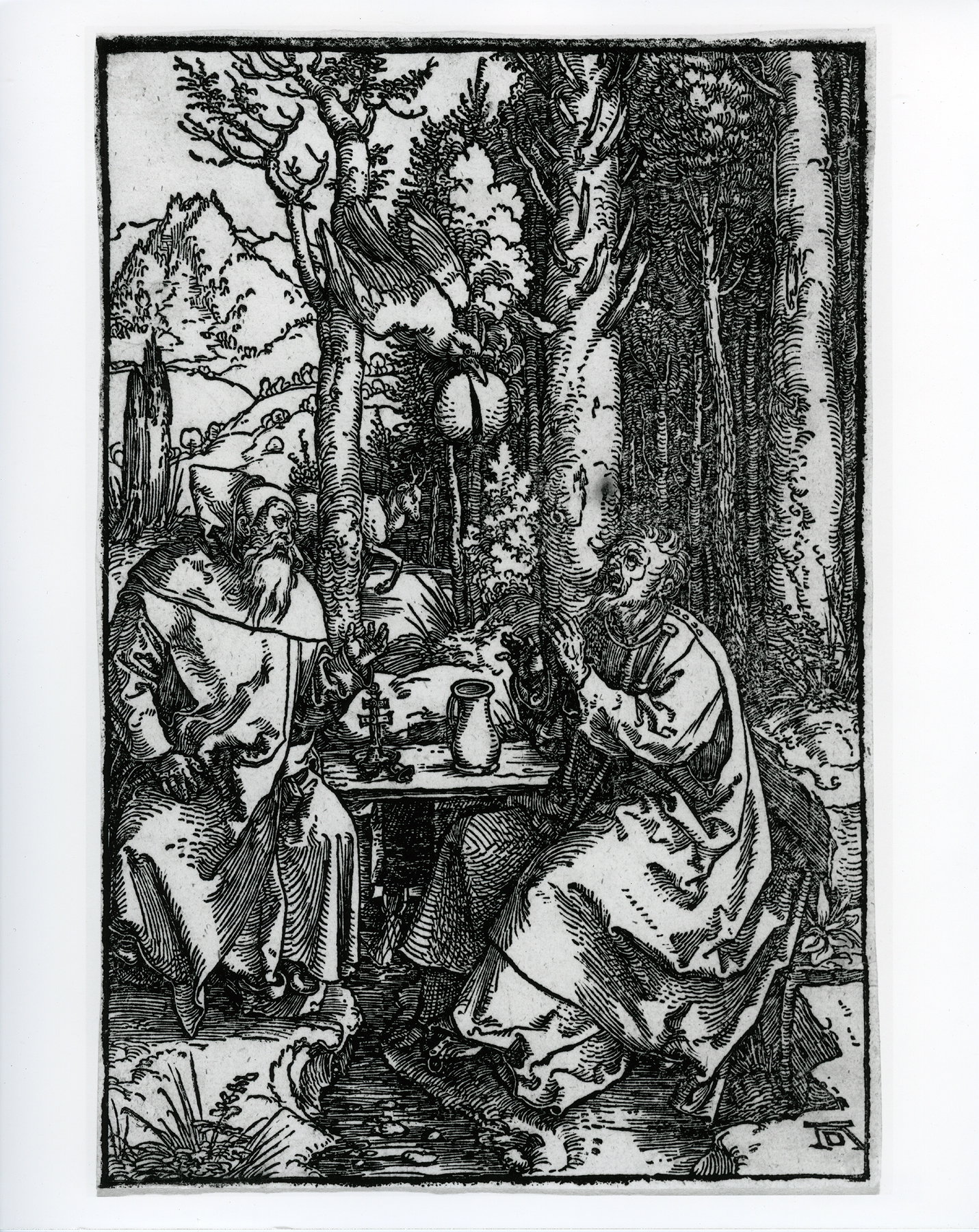
Albrecht Dürer (German, 1471–1528), The Hermits St. Anthony and St. Paul in the Desert, ca. 1504. Woodcut. Milwaukee Art Museum, Maurice and Esther Leah Ritz Collection M2004.179. Photo credit: Efraim Lev-er.

Sometimes the specialized terminology used in the study of art can be intimidating. This can particularly be a problem with works on paper! In this post I hope to explain the difference between two important printmaking techniques, using Albrecht Dürer as an example, so that they are no longer so daunting.

Categories
Art Collection Curatorial European Prints and Drawings

From the Collection—Albrecht Dürer, Part 2

The inaugural exhibition in the European works on paper rotation space (on view until March 20) explores the Renaissance in Germany. Comprised completely of prints from the collection of the Milwaukee Art Museum, you can find engravings by Heinrich Aldegrever (1502–ca. 1561) and stipple engravings by Hans Sebald Beham (1500–1550). But you can’t study printmaking in the German Renaissance without a serious consideration of Albrecht Dürer (1471–1528). And we’re lucky enough to have 14 prints by the master! This is the second of a series of posts related to Dürer’s prints.

Albrecht Dürer (German, 1471–1528), Madonna with the Monkey, ca. 1498. Engraving. Milwaukee Art Museum, Gertrude Nunnemacher Schuchardt Collection, presented by William H. Schuchardt M1924.169. Photo credit: P. Richard Eells.

Last time, we learned a little about Albrecht Dürer by looking at a woodcut from his series called The Apocalypse. In this post, we’ll look at a different type of print—an engraving—with religious subject matter.

Madonna with the Monkey is one of several Madonna and child compositions that Dürer produced throughout his career. His Catholic German patrons would be interested in the powerful woman that had become so central to the salvation of man by being the mother of Christ. This type of print would be popular and consequently sell well. In the current display at the Milwaukee Art Museum, there are two other depictions of the Madonna and child (Madonna and the Infant in Swaddling and the Madonna with the Pear) and two prints from the series The Life of the Virgin (The Death of Mary and The Circumcision of Jesus).

In Madonna with the Monkey, Dürer shows a young, loving mother holding her chubby baby. This display of emotion, combined with the well-modeled physicality of the figures, is a contrast to previous depictions of the Madonna and Child found in central Europe (compare this sculptural example at the Metropolitan Museum of Art). This is likely a result of Dürer’s first visit to Italy, from 1491 to 1495. While there, he studied artwork of the Italian Renaissance and the classical past. He brought back sketches and ideas which moved German art away from the frontal, stylized representations of the middle ages.

Categories
Art Collection Curatorial European Prints and Drawings

From the Collection—Albrecht Dürer, Part 1

The inaugural exhibition in the European works on paper rotation space (on view until March 20) explores the Renaissance in Germany. Comprised completely of prints from the collection of the Milwaukee Art Museum, you can find engravings by Heinrich Aldegrever (1502–ca. 1561) and stipple engravings by Hans Sebald Beham (1500–1550). But you can’t study printmaking in the German Renaissance without a serious consideration of Albrecht Dürer (1471–1528). And we’re lucky enough to have 14 prints by the master! This is the first of a series of posts related to Dürer’s prints.

Albrecht Dürer (German, 1471–1528), St. John's Vision of Christ and the Seven Candlesticks, from the series The Apocalypse, 1498; published 1511. Woodcut. Milwaukee Art Museum, Gift of Mrs. Albert O. Trostel M1972.41. Photo credit: P. Richard Eells.
Albrecht Dürer (German, 1471–1528), St. John’s Vision of Christ and the Seven Candlesticks, from the series The Apocalypse, 1498; published 1511. Woodcut. Milwaukee Art Museum, Gift of Mrs. Albert O. Trostel M1972.41. Photo credit: P. Richard Eells.

Albrecht Dürer is often considered the father of the northern Renaissance. He traveled to Italy twice, bringing the Italian Renaissance’s interests in art and culture back to Germany. Not only was he a well-respected visual artist, but he was also a widely published author on humanistic thought and scientific topics.  Also, he was engaged in debate on religious issues. Serving as the first court artist to Holy Roman Emperors Maximilian I and his successor Charles V, Dürer had access to some of the highest social circles of Europe.  Accordingly, he embraced the Renaissance idea of the artist as a creative genius whose gifts were bestowed by God rather than as a hard-working craftsman.

One way that Dürer influenced the artistic trajectory of the northern Renaissance is through his masterful approach to printmaking. His exploration of the unique way that prints can show light and dark, as well as how they can tell a powerful story, made printmaking an artwork in its own right rather than just a way to illustrate printed books. Today we begin a series that explores Dürer’s role in the history of printmaking by looking closely at some of his prints on view at the Milwaukee Art Museum.

Categories
Art Collection Curatorial European

Questions of Provenance—Doubting Thomas by Adriaen van der Werff, Part 2

Adriaen van der Werff (Dutch, 1659–1722). Self-portrait with the Portrait of his Wife, Margaretha van Rees, and their Daughter Maria, 1699. Oil on canvas. Rijksmuseum, Amsterdam, SK-A-465.

In the first part of this post, using the Milwaukee Art Museum’s painting Doubting Thomas, we explored the biography and style of Dutch artist Adriaen van der Werff (a self-portrait of him from the Rijksmuseum is to the left).  This week, we’re going to trace the provenance of Doubting Thomas and see what it tells us about the history of taste in art and trends in collecting.

Van der Werff was one of the most famous painters of his day and was known internationally throughout his career. He was in demand in his earlier career for his rich portraits in the popular “Fine School” style. One example of his early work is the 1685 painting in the National Gallery, London called Portrait of a Man in a Quilted Gown.

Then in the 1690’s van der Werff’s paintings became more and more influenced by the classical style admired in France. He already had a tendency to use richer detail and elegant lines in his Fine School paintings. An important reason for this transition is the fact that the new style was preferred by patrons in the late Baroque period. If you want to make a living, you paint want people want to buy!

Categories
Art Collection Curatorial European

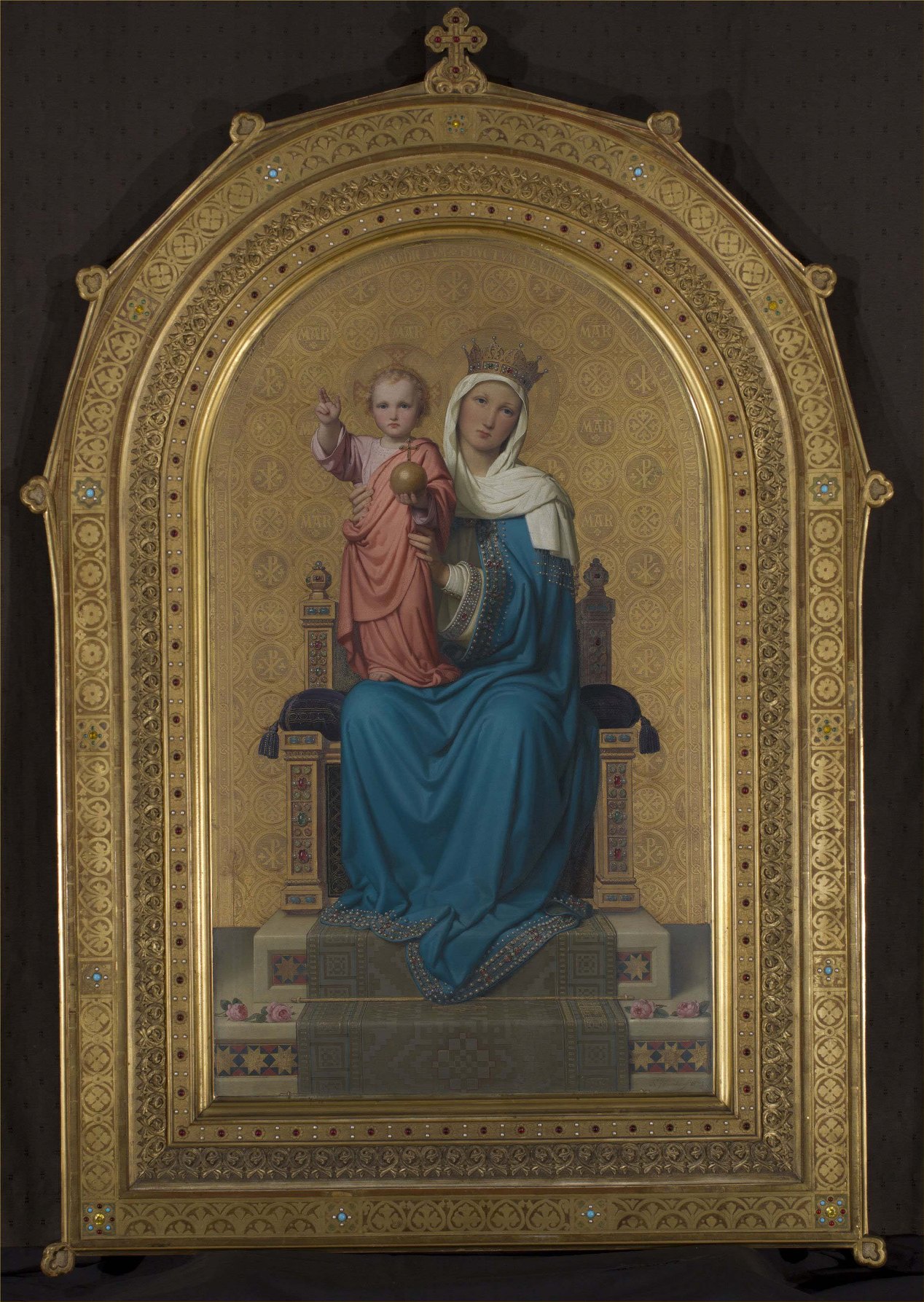
From the Collection—Mother of the World by Franz Ittenbach

Franz Ittenbach (German, 1813–1879), Mother of the World, 1872. Oil on panel. Milwaukee Art Museum, Purchase, René von Schleinitz Memorial Fund and with funds in memory of Betty Croasdaile and John E. Julien.

From the glittery gold background to the touching depiction of the Madonna and child, the Milwaukee Art Museum’s new acquisition Mother of the World by Franz Ittenbach (German, 1813–1879) is a perfect subject for our blog post during the weeks leading up to Christmas.

At first glance, Mother of the World probably reminds you of the painting that I highlighted two years ago during the holidays: Nardo di Cione’s Madonna and Child. But Ittenbach is a German artist of the 19th century, not an Italian artist of the 14th century! Clearly, Ittenbach is looking back at paintings like the Nardo. This is because he is part of a German art group called the Nazarenes.

Categories
Art Collection Curatorial European

Questions of Provenance—Doubting Thomas by Adriaen van der Werff, Part 1

Adriaen van der Werff (Dutch, 1659–1722). Doubting Thomas (The Incredulity of St. Thomas), 1710. Oil on wood panel. 24 15/16 × 18 15/16 in. (63.34 × 48.1 cm). Milwaukee Art Museum, Gift of Mr. and Mrs. R. V. Krikorian M1971.60. Photo credit: P. Richard Eells.

Remember in an earlier post when I said that the study of provenance can tell us a lot about the history of taste? We’ll see how by taking a closer look at one of the paintings in the collection of the Milwaukee Art Museum.

The painting is Doubting Thomas—sometimes called The Incredulity of St. Thomas—by Dutch artist Adriaen van der Werff (1659–1722).

Adriaen van der Werff started his career by painting in the style called Fijnschilder, which literally means “Fine School”. In Fine School painting, the goal was to create a painting that is so smooth and pristine that individual brushstrokes could not be seen. Often the artworks were small and filled with details that required close looking and layers of symbolism. A perfect example is our A Young Woman at a Window with a Parrot and a Birdcage, which you can see bellow (and which will be discussed in a future blog post!).

By the late 17th century, van der Werff began to change his style, painting in a classical style that was popular in France. Doubting Thomas is a perfect example of this classical style. You can see it in the long, elegant proportions of his figures and in his rich depiction of costume.

Categories
Art Collection Modern

Bradley Collection Celebrates 40th Anniversary!

Older woman standing next to a framed work of art
Mrs. Harry L. Bradley standing standing her “Girl in a Straw Hat” on exhibition in “Pierre Bonnard” exhibition at The Museum of Modern Art, New York, October 7-November 29, 1964.

This year the Milwaukee Art Museum celebrates the 40th anniversary of the Mrs. Harry L. Bradley Collection. Upon its donation in 1975, the collection elevated the status of the Milwaukee Art Museum from a local art museum to a museum with a world-class collection.

The collection contains an assortment of European and American paintings, prints, watercolors, and sculptures from the late nineteenth century to the early 1970s, including works by Braque, Picasso, and Kandinsky, to name a few. During my time at the Museum I had the chance to attend a Member lecture with Barbara Brown Lee, a longtime educator at the Museum and personal friend of Mrs. Bradley, to learn more about the collection and the woman behind it.

Categories
Art Collection Curatorial European Prints and Drawings

From the Collection–Vegetable Market at Pontoise by Camille Pissarro

Many of the artists featured in the special exhibition Van Gogh to Pollock: Modern Rebels, Masterworks from the Albright-Knox Art Gallery are also represented in the collection of the Milwaukee Art Museum. This is the fourth in a series of blog posts that will highlight Milwaukee’s artworks during the run of the exhibition.

Camille Pissarro (French, 1830–1903), Vegetable Market at Pontoise, 1891. Etching, drypoint, and aquatint. Milwaukee Art Museum, Maurice and Esther Leah Ritz Collection M2004.283. Photo credit: Efraim Lev-er.

A bustling market welcomes the viewer of Impressionist artist Camille Pissarro’s Vegetable Market at Pontoise. We can almost hear the commotion of the rural village where he lived for some time.

Playing the part of both voyeur and companion, we stand behind a woman selling her vegetables. A young woman stops in front of us, deliberating whether or not she would like to buy what is gently offered to her. We can nearly hear their more quiet conversation in the midst of the lively square where all individuals congregate without segregation of rank. There are men with top hats conversing and women in fine dresses strolling, while others are clearly from a more modest upbringing.