Categories
Art Collection Curatorial European Exhibitions Prints and Drawings

From the Collection: The Mocking of Ceres

The current exhibition in the European works on paper rotation space (on view until April 2) is Gods and Heroes: Classical Mythology in European Prints. The show features 21 prints that cover the Renaissance through the early twentieth century and are by artists from Germany, Holland, France, Italy, and England. Each print offers insight into why European artists used the narratives of classical mythology. This is the second in a series of posts focusing on the exhibition.

Hendrik Goudt (Dutch, 1583–1648), after Adam Elsheimer (German, 1578–1610). The Mocking of Ceres, 1610, published 1633. Milwaukee Art Museum, Gift of Friends of Art, from the collection of Philip and Dorothy Pearlstein M2000.136. Photo credit: Larry Sanders.

We’ve already seen how the ancient sculpture of Italy inspired a French Rococo artist in the four prints of the Bacchanals. In this post, we’ll explore another artist’s use of Classical mythology.

The Mocking of Ceres shows Ceres, the goddess of the earth and agriculture, taking a drink. She has been searching the world for her daughter Persephone, who was abducted by Pluto, the ruler of the underworld. Coming upon a small cottage, she asks an old woman for some water. Because Ceres is drinking quickly, a little boy mocks her for her greediness. Angry, Ceres throws her drink at the boy and turns him into a lizard.

This story is just one of the many told by the Roman poet Ovid (43 BC–AD 17) in his work called Metamorphoses. The book-length poem, written in Latin, collected together Greek mythological stories that had some element of transformation as a plot point.

Categories
Art Collection Curatorial European Exhibitions Prints and Drawings

From the Collection: Bacchanals by Jean-Honoré Fragonard

The current exhibition in the European works on paper rotation space (on view until April 2) is Gods and Heroes: Classical Mythology in European Prints. The show features 21 prints that cover the Renaissance through the early twentieth century and are by artists from Germany, Holland, France, Italy, and England. Each print offers insight into why European artists used the narratives of classical mythology. This is the first in a series of posts focusing on the exhibition.

Jean-Honoré Fragonard (French, 1732–1806), Nymph Supported by Two Satyrs, from the series Bacchanals, 1763. Etching. Plate and sheet: 5 7/16 × 8 1/8 in. (13.81 × 20.64 cm). Milwaukee Art Museum, Gift of the DASS Fund M2010.65.1. Photo credit: John R. Glembin.

For most visitors to the Milwaukee Art Museum, the French artist Jean-Honoré Fragonard (1732–1806) is known as a painter. He painted The Shepherdess (pictured below), which is the focal point of our Rococo gallery.

And it is the centerpiece of this gallery for good reason! It is a perfect example of the elegant and amorous style so popular in eighteenth century France.

A beautiful young lady, dressed in a fashionable and revealing costume (we can see her ankles!), sits in the countryside awaiting her lover, who enters the scene over the distant hill. The composition is full of delicate curlicues and pastel colors, creating a frothy vision of the pastoral ideal.

Categories
Art Behind the Scenes Collection Contemporary Curatorial Prints and Drawings

From the Vault: Rubber Stamp Portfolio, 1977

Tom Wesselmann (American, 1931–2004), Shiny Nude, from the Rubber Stamp Portfolio, 1976, published 1977. Rubber stamp print, printed in color. Image: 5 7/8 × 5 11/16 in. (14.92 × 14.45 cm); sheet: 8 × 8 in. (20.32 × 20.32 cm). Gift of Virginia M. and J. Thomas Maher III M1994.263.1. © Estate of Tom Wesselmann/Licensed by VAGA, New York, NY.

As the Collections Manager of Works on Paper, one of my duties is to facilitate the movement of the prints, drawings and photography in the collection for exhibitions, rotations, loans and viewings for researchers in the Herzfeld Study Center.

Our works on paper storage vault is organized into logical, easy-to-use groupings by size, century, nationality and then by artist’s last name (OK; it’s highly organized).

While pulling a print to go on view in the galleries, I stumbled upon a print by Carl Andre from a portfolio that I have never worked with before.

Categories
Art Collection Curatorial European Exhibitions Prints and Drawings

From the Collection: The Nudes of Anders Zorn

The current exhibition in the European works on paper rotation space (on view until July 31) is Anders Zorn: Sweden’s Painter-Etcher. Featuring all 18 prints in the Milwaukee Art Museum’s collection by Zorn, this is the first time ever that they have been on view at the same time. This is the fifth and final in a series of posts focusing on the exhibition.

Anders Leonard Zorn (Swedish, 1860–1920), Dal River (Dalälven), 1919. Etching, roulette, drypoint, and engraving. Milwaukee Art Museum, Gift of Mr. Lindsay Hoben M1966.111. Photo credit: John R. Glembin

This week, we’ll wrap up our consideration of the prints of Anders Zorn with a look at one of his favorite subjects: the female nude.

In 1888, Zorn became one of the first artists to paint nude women outdoors in a publicly accessible setting. Before this time, if an artist wanted to show a nude out-of-doors, the proper thing was to sketch or paint the outdoor setting and then add the nude from a model later in the privacy of the studio.

How different was Zorn’s use of the female nude? Just compare the 1875 painting Nymph of the Hunt with Fauns by Swedish artist Julius Kronberg (1850–1921) with Zorn’s copy in watercolor, Love Nymph from 1885, both in the Nationalmuseum in Stockholm.

Categories
Art Collection Curatorial European Exhibitions Prints and Drawings

From the Collection: Anders Zorn Returns to Sweden

The current exhibition in the European works on paper rotation space (on view until July 31) is Anders Zorn: Sweden’s Painter-Etcher. Featuring all 18 prints in the Milwaukee Art Museum’s collection by Zorn, this is the first time ever that they have been on view at the same time. This is the fourth in a series of posts focusing on the exhibition.

Anders Leonard Zorn (Swedish, 1860–1920), Skerikulla, 1912. Etching and engraving. Milwaukee Art Museum, Gertrude Nunnemacher Schuchardt Collection, presented by William H. Schuchardt M1924.140. Photo credit: John R. Glembin.

So far, in our most recent series of posts, we have seen that, in the 1880’s, the lively cultural scene in newly urban Paris not only inspired Anders Zorn to adopt a modern artistic sensibility but also provided him with modern subject matter. In 1896, however, Zorn and his wife decided to move their permanent residence from Paris back to their native Sweden.

The Zorns built their house in Swedish folk style and decorated it both with local artwork and treasures from their travels. In addition, they gradually moved historical timber buildings from around the area to the property, eventually accumulating about 40, including Sweden’s oldest secular timber building from 1237. A little ways from the house, Zorn established his studio in a farm cottage that was called Gopsmor.

Categories
Art Collection Curatorial European Exhibitions Prints and Drawings

From the Collection: Anders Zorn Captures Modern Life

The current exhibition in the European works on paper rotation space (on view until July 31) is Anders Zorn: Sweden’s Painter-Etcher. Featuring all 18 prints in the Milwaukee Art Museum’s collection by Zorn, this is the first time ever that they have been on view at the same time. This is the third in a series of posts focusing on the exhibition.

Anders Leonard Zorn (Swedish, 1860–1920), Girl With A Cigarette II, 1891. Etching. Milwaukee Art Museum, Gertrude Nunnemacher Schuchardt Collection, presented by William H. Schuchardt M1924.131. Photo credit: John R. Glembin.

Paris in the 1880’s was like no other place.

Citizens from all over France joined with immigrants from all over the world.  Some flocked there to take advantage of new opportunities in industry, others to experience an avant-garde culture.  The population more than doubled in the second half of the nineteenth century.

New entertainment venues popped up to cater to the masses.  Circuses, dance halls, cabarets, theaters, operas, museums (including the first wax museum in Paris) added to the excitement of the city.

Meanwhile, Napoleon III, the Emperor of France, hired an urban planner who changed the entire look of the city.  A warren of medieval buildings was transformed into a modern city with wide boulevards.

Paris was experiencing the growth of a modern urban center–and all the problems and benefits of that growth.  It is probably not surprising that visual artists found inspiration with new subject matter and developed innovative ways to depict it.

Anders Zorn (Swedish, 1860–1920) made Paris his home between 1886 and 1896. Accordingly, his artistic output during this period shows the influence of the modern city around him.

Categories
Art Collection Curatorial European Exhibitions Prints and Drawings

From the Collection: Anders Zorn’s Portrait Prints

The current exhibition in the European works on paper rotation space (on view until July 31) is Anders Zorn: Sweden’s Painter-Etcher.  Featuring all 18 prints in the Milwaukee Art Museum’s collection by Zorn, the exhibition is the first time ever that they have been on view at the same time.  This is the second in a series of posts focusing on the exhibition.

Anders Leonard Zorn (Swedish, 1860–1920), King Oscar II (or Oscar II), 1898. Etching and aquatint. Milwaukee Art Museum, Gift of Mrs. Joseph Greene M1979.23. Photo credit: John R. Glembin.

Last time, we were introduced to career of Anders Zorn (Swedish, 1860–1920). In this post, we’ll consider a few more of his portrait prints.

In the Milwaukee Art Museum exhibition, there are portraits of two members of the Swedish royal family: the King of Sweden, Oscar II (left), and the Crown-Princess Margaret (below), who was married to Gustav Adolf, the grandson of King Oscar. Margaret herself was the granddaughter of Queen Victoria of England.

Oscar II was a fan of Zorn’s from the artist’s earliest days, when the king tried to purchase a watercolor from him at an exhibition at the Stockholm Academy. The king eventually commissioned some painted portraits from Zorn. Our portrait print is not based upon any of those paintings. It shows the king at leisure, enjoying his yacht—he is even wearing a captain’s hat. It seems appropriate to use the intimate scale of an etching to capture the head of state.

Categories
Art Collection Curatorial European Exhibitions Prints and Drawings

From the Collection: Anders Zorn and Etching

The current exhibition in the European works on paper rotation space (on view until July 31) is Anders Zorn: Sweden’s Painter-EtcherFeaturing all 18 prints in the Milwaukee Art Museum’s collection by Zorn, the exhibition is the first time ever that they have been on view at the same time.  This is the first in a series of posts focusing on the exhibition.

Anders Leonard Zorn (Swedish, 1860–1920), Zorn and his Wife, 1890. Etching, possibly drypoint, and graphite. Milwaukee Art Museum, Gertrude Nunnemacher Schuchardt Collection, presented by William H. Schuchardt M1924.141. Photo credit: John R. Glembin

Did you know that Anders Zorn might be the most famous artist you’ve never heard of?

During his career, which spanned about 20 years before and 20 years after 1900, Zorn was in high demand for painted portrait commissions in Europe and in the U.S.  In fact, he was in direct competition with John Singer Sargent (American, 1856–1925), one of the best known portrait painters at the turn of the twentieth century.

So, who was Anders Zorn?

Anders Zorn was born in 1860, the son of a German brewer and one of his Swedish employees.  His parents were not married, and Zorn’s father was not very involved in his son’s life, although he did leave Zorn a small inheritance when he died.

Categories
Art Collection Curatorial European Prints and Drawings

From the Collection—Albrecht Dürer, Part 3

The inaugural exhibition in the European works on paper rotation space (on view until March 20) explores the Renaissance in Germany. Comprised completely of prints from the collection of the Milwaukee Art Museum, you can find engravings by Heinrich Aldegrever (1502–ca. 1561) and stipple engravings by Hans Sebald Beham (1500–1550). But you can’t study printmaking in the German Renaissance without a serious consideration of Albrecht Dürer (1471–1528). And we’re lucky enough to have 14 prints by the master! This is the third and final of a series of posts related to Dürer’s prints.

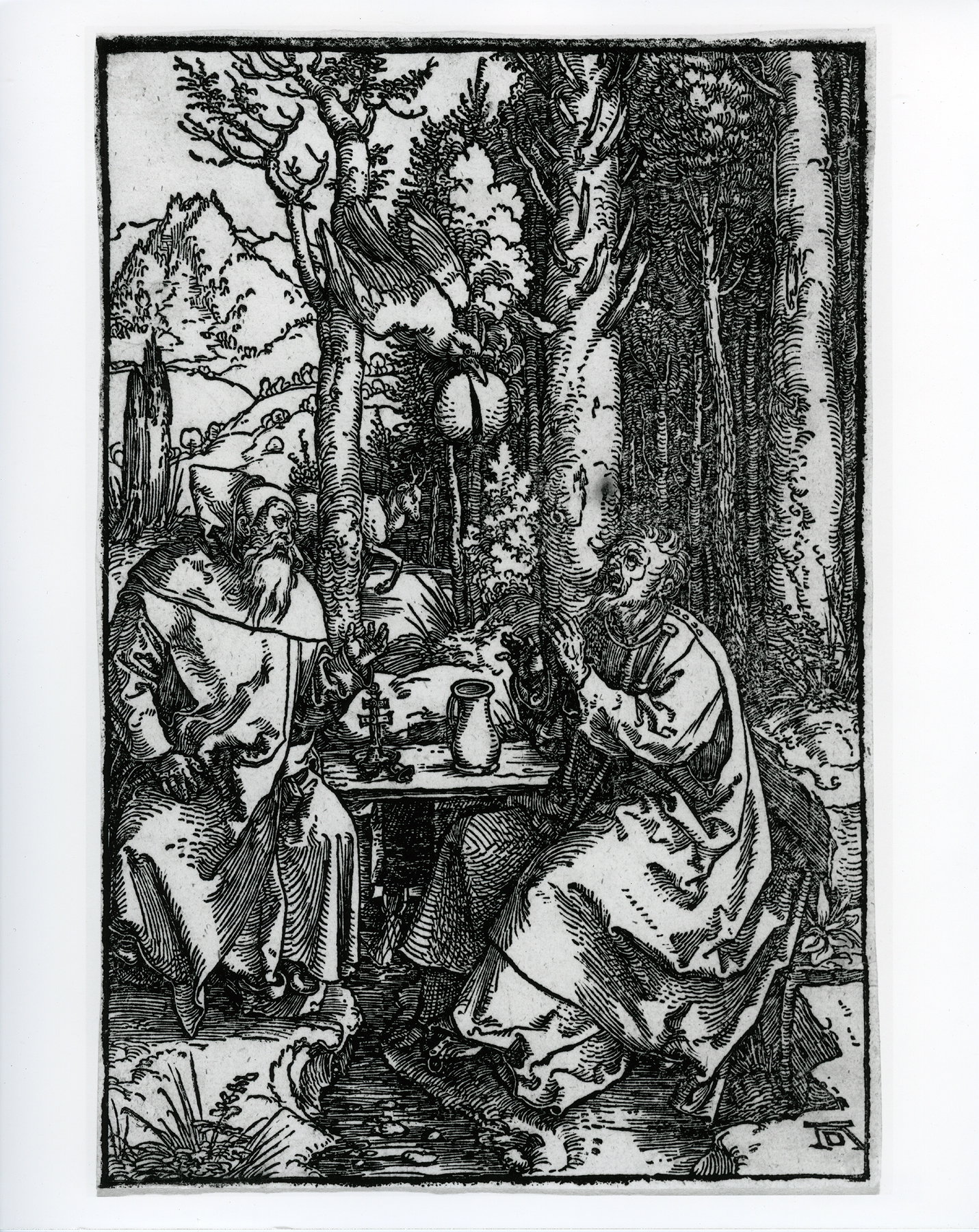
Albrecht Dürer (German, 1471–1528), The Hermits St. Anthony and St. Paul in the Desert, ca. 1504. Woodcut. Milwaukee Art Museum, Maurice and Esther Leah Ritz Collection M2004.179. Photo credit: Efraim Lev-er.

Sometimes the specialized terminology used in the study of art can be intimidating. This can particularly be a problem with works on paper! In this post I hope to explain the difference between two important printmaking techniques, using Albrecht Dürer as an example, so that they are no longer so daunting.

Categories
Art Collection Curatorial European Prints and Drawings

From the Collection—Albrecht Dürer, Part 2

The inaugural exhibition in the European works on paper rotation space (on view until March 20) explores the Renaissance in Germany. Comprised completely of prints from the collection of the Milwaukee Art Museum, you can find engravings by Heinrich Aldegrever (1502–ca. 1561) and stipple engravings by Hans Sebald Beham (1500–1550). But you can’t study printmaking in the German Renaissance without a serious consideration of Albrecht Dürer (1471–1528). And we’re lucky enough to have 14 prints by the master! This is the second of a series of posts related to Dürer’s prints.

Albrecht Dürer (German, 1471–1528), Madonna with the Monkey, ca. 1498. Engraving. Milwaukee Art Museum, Gertrude Nunnemacher Schuchardt Collection, presented by William H. Schuchardt M1924.169. Photo credit: P. Richard Eells.

Last time, we learned a little about Albrecht Dürer by looking at a woodcut from his series called The Apocalypse. In this post, we’ll look at a different type of print—an engraving—with religious subject matter.

Madonna with the Monkey is one of several Madonna and child compositions that Dürer produced throughout his career. His Catholic German patrons would be interested in the powerful woman that had become so central to the salvation of man by being the mother of Christ. This type of print would be popular and consequently sell well. In the current display at the Milwaukee Art Museum, there are two other depictions of the Madonna and child (Madonna and the Infant in Swaddling and the Madonna with the Pear) and two prints from the series The Life of the Virgin (The Death of Mary and The Circumcision of Jesus).

In Madonna with the Monkey, Dürer shows a young, loving mother holding her chubby baby. This display of emotion, combined with the well-modeled physicality of the figures, is a contrast to previous depictions of the Madonna and Child found in central Europe (compare this sculptural example at the Metropolitan Museum of Art). This is likely a result of Dürer’s first visit to Italy, from 1491 to 1495. While there, he studied artwork of the Italian Renaissance and the classical past. He brought back sketches and ideas which moved German art away from the frontal, stylized representations of the middle ages.