This post is part of a series that that will highlight some of the interesting provenance cases in the Milwaukee Art Museum’s Collection.
Jan Victors (Dutch, 1619–after 1676), The Marriage Trap, ca. 1640–60. Oil on canvas. Milwaukee Art Museum, Gift of Richard and Erna Flagg M1974.233. Photo credit: John Nienhuis, Dedra Walls.
Last time we looked at The Marriage Trap’s provenance and attribution just before and since its acquisition by the Milwaukee Art Museum. That’s usually the easiest part.
In this post, we’ll see how piecing together the ownership of a painting requires pulling information from a number of sources, thinking critically about what we find, and then sometimes making an educated guess (noted as such, of course).
Jan Victors (Dutch, 1619–after 1676), The Marriage Trap, ca. 1640–60. Oil on canvas. Milwaukee Art Museum, Gift of Richard and Erna Flagg M1974.233. Photo credit: John Nienhuis, Dedra Walls.
Jan Victors (Dutch, 1619–after 1676) was probably a student of the famous Dutch Golden Age artist Rembrandt (Dutch, 1606–1669). Just like his contemporaries, Victors created works with various popular subjects, including religious scenes, portraits, and genre paintings.
The Milwaukee Art Museum has a market scene in its collection which falls into this last category. The Marriage Trap is set along the familiar canals of Holland. A peasant wedding party is purchasing a fish for the ensuing celebration.
But the Dutch loved layering painting with many layers of symbolism–often for a humorous result. Victor’s ability in combining realism with humor is illustrated by the context and placement of the fish. It is most likely intended as a sexual metaphor!
Recently, The Marriage Trap was on our list for submission to the Art Loss Register. A quick look at the thick object file—where we keep records and correspondence related to one artwork—showed me that there was some untangling to do! So, I carefully read through everything, looked for more resources, and double checked it all before organizing it in a clearly stated entry for our collection database.
Mrs. Harry L. Bradley standing standing her “Girl in a Straw Hat” on exhibition in “Pierre Bonnard” exhibition at The Museum of Modern Art, New York, October 7-November 29, 1964.
This year the Milwaukee Art Museum celebrates the 40th anniversary of the Mrs. Harry L. Bradley Collection. Upon its donation in 1975, the collection elevated the status of the Milwaukee Art Museum from a local art museum to a museum with a world-class collection.
The collection contains an assortment of European and American paintings, prints, watercolors, and sculptures from the late nineteenth century to the early 1970s, including works by Braque, Picasso, and Kandinsky, to name a few. During my time at the Museum I had the chance to attend a Member lecture with Barbara Brown Lee, a longtime educator at the Museum and personal friend of Mrs. Bradley, to learn more about the collection and the woman behind it.
Pablo Picasso (Spanish, 1881–1973) is not usually considered a political artist. His favorite artistic subjects were still-lifes, portraits, harlequins, and other seemingly uncontroversial images.
But in some key instances, world events were an important influence on him. We don’t have to look far to find an example: the Milwaukee Art Museum’s The Cock of the Liberation (Le Coq de la Liberation), painted by Picasso in 1944.
Camille Pissarro (French, 1830–1903), Vegetable Market at Pontoise, 1891. Etching, drypoint, and aquatint. Milwaukee Art Museum, Maurice and Esther Leah Ritz Collection M2004.283. Photo credit: Efraim Lev-er.
A bustling market welcomes the viewer of Impressionist artist Camille Pissarro’s Vegetable Market at Pontoise. We can almost hear the commotion of the rural village where he lived for some time.
Playing the part of both voyeur and companion, we stand behind a woman selling her vegetables. A young woman stops in front of us, deliberating whether or not she would like to buy what is gently offered to her. We can nearly hear their more quiet conversation in the midst of the lively square where all individuals congregate without segregation of rank. There are men with top hats conversing and women in fine dresses strolling, while others are clearly from a more modest upbringing.
Comparing the painting by Chaïm Soutine (Russian, 1893–1943, active in France) in the Modern Rebels show (Carcass of Beef) with the one in the Milwaukee Art Museum’s collection (Children and Geese), it is almost difficult to believe that the two works are by the same artist. The former depicts the body of a cow, flayed open from neck to tail, its scarlet inner organs glistening vividly against the shadowed blue background. In contrast, the artwork within Milwaukee’s own collection is a simple rural scene: a young boy and girl walking down a country path, with abstract brushstrokes suggesting a flock of white geese beside them.
A shockingly graphic image of blood and death versus an innocent, bucolic portrayal of childhood. How could these two works have been painted by the same artist?
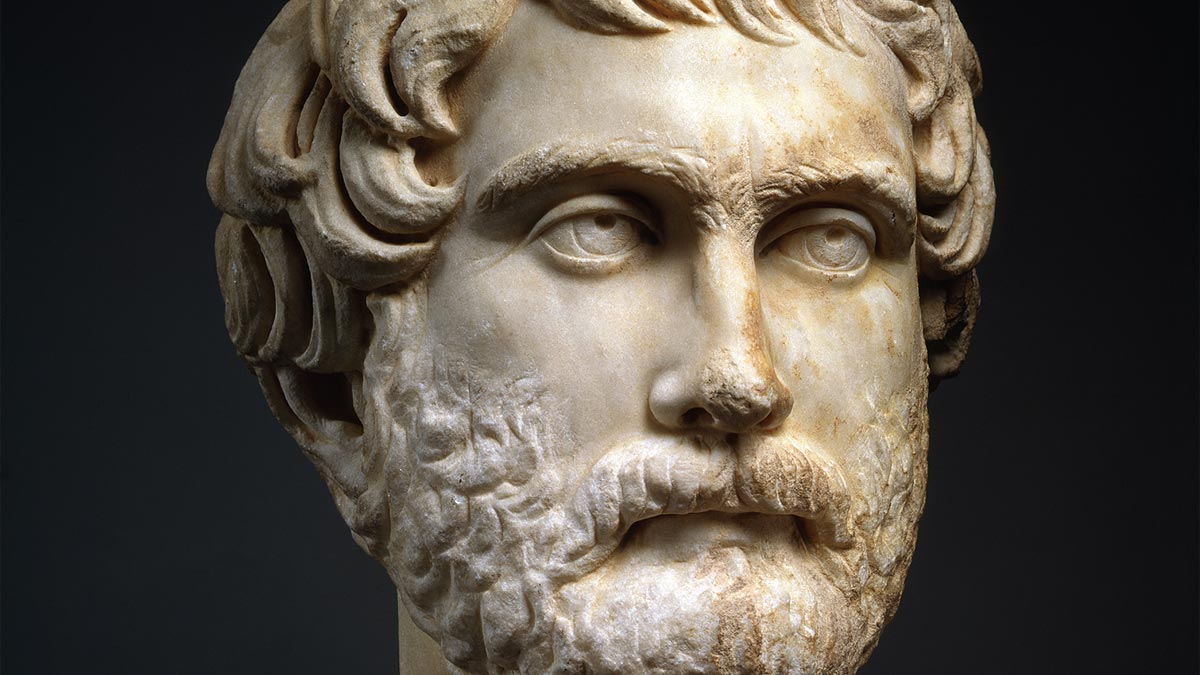
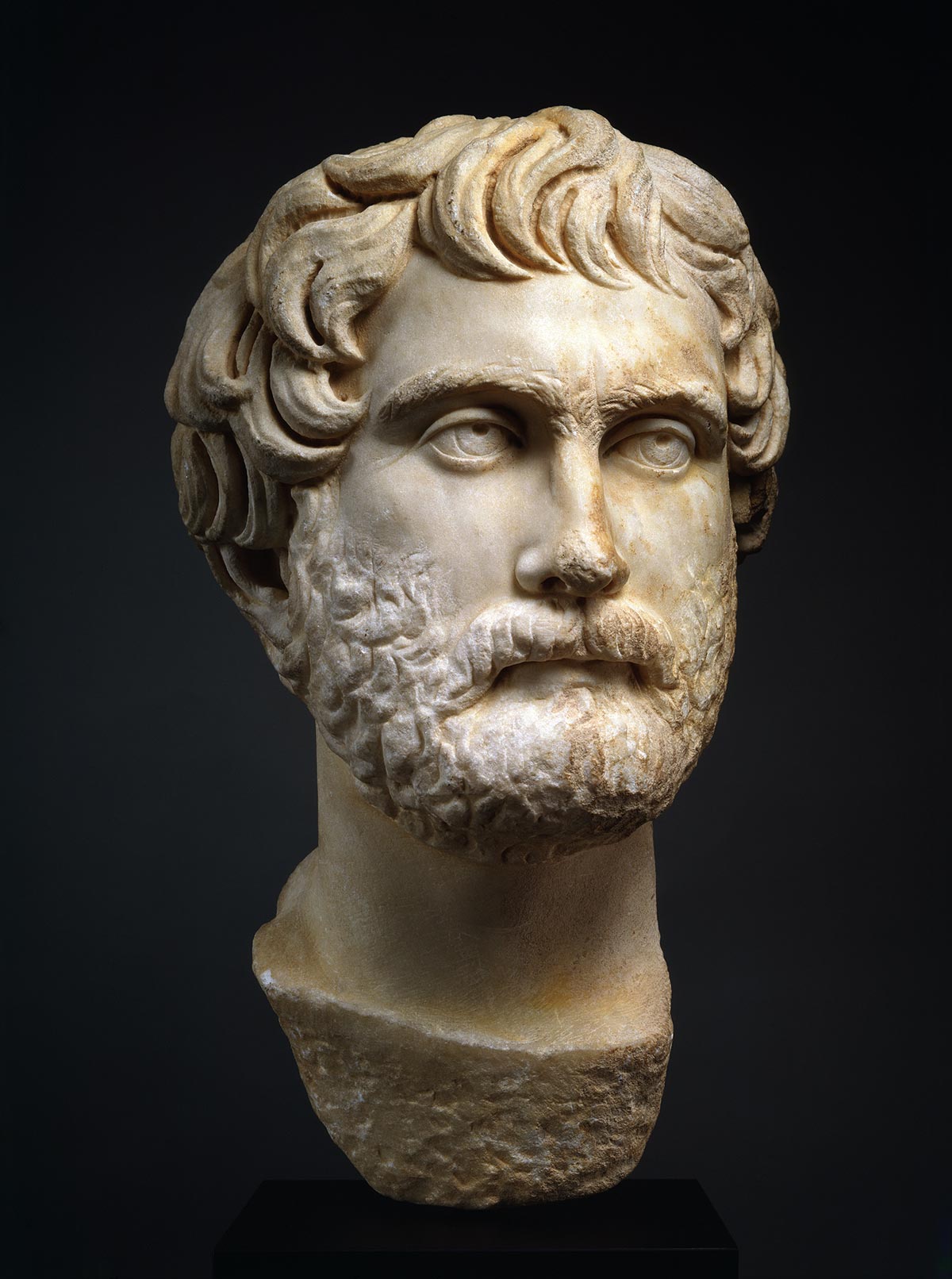
Roman, Late Hadrianic (AD 117–138) or Antonine (AD 138–193) Period. Portrait of a Man, 2nd century AD. Marble. height: 16 1/2 in. (41.91 cm). Milwaukee Art Museum, Gift of Suzanne and Richard Pieper M2004.582.
Roman, Late Hadrianic (AD 117–138) or Antonine (AD 138–193) Period. Portrait of a Man, 2nd century AD. Marble. height: 16 1/2 in. (41.91 cm). Milwaukee Art Museum, Gift of Suzanne and Richard Pieper M2004.582.
Walk into any home today and you’re likely to see photographs of people. Carefully posed family portraits, snapshots from vacation, and, of course, selfies surround us in our homes. People have an almost innate desire to capture the faces of their friends and family, not to mention themselves.
Two thousand years ago, Ancient Romans didn’t have photography, but they did have the same desire to capture and remember the faces of those they loved. Wealthy Roman homes were filled with portraits of family members both past and present, most often in the form of busts and full-length statues. One such portrait, The Milwaukee Art Museum’s Portrait of a Man, was sculpted during the late Hadrianic (117-138 CE) or Antonine Period (138-193 CE). Based on the size and detail of this marble portrait, it would have likely been placed in a prominent position in a house or garden. Just like today, all portraits weren’t created equal, and sculptures like this one are akin to an expensive portrait you might commission from a professional photographer, rather than a snapshot developed at a convenience store.
Wassily Kandinsky (Russian, 1866–1944), Fragment I for Composition VII (Center), 1913. Oil on canvas. Milwaukee Art Museum, Gift of Mrs. Harry Lynde Bradley M1958.12. Photo credit by Larry Sanders.
Wassily Kandinsky (Russian, 1866–1944), Fragment I for Composition VII (Center), 1913 (detail). Oil on canvas. Milwaukee Art Museum, Gift of Mrs. Harry Lynde Bradley M1958.12. Photo credit by Larry Sanders.
Only one artwork from the Milwaukee Art Museum’s own collection is displayed as part of the newly-opened Modern Rebels exhibition: Wassily Kandinsky’s Fragment I for Composition VII. When one reads the title of the equally vibrant artwork from the Albright-Knox Gallery hung next to it, the reason for its inclusion becomes instantly clear.
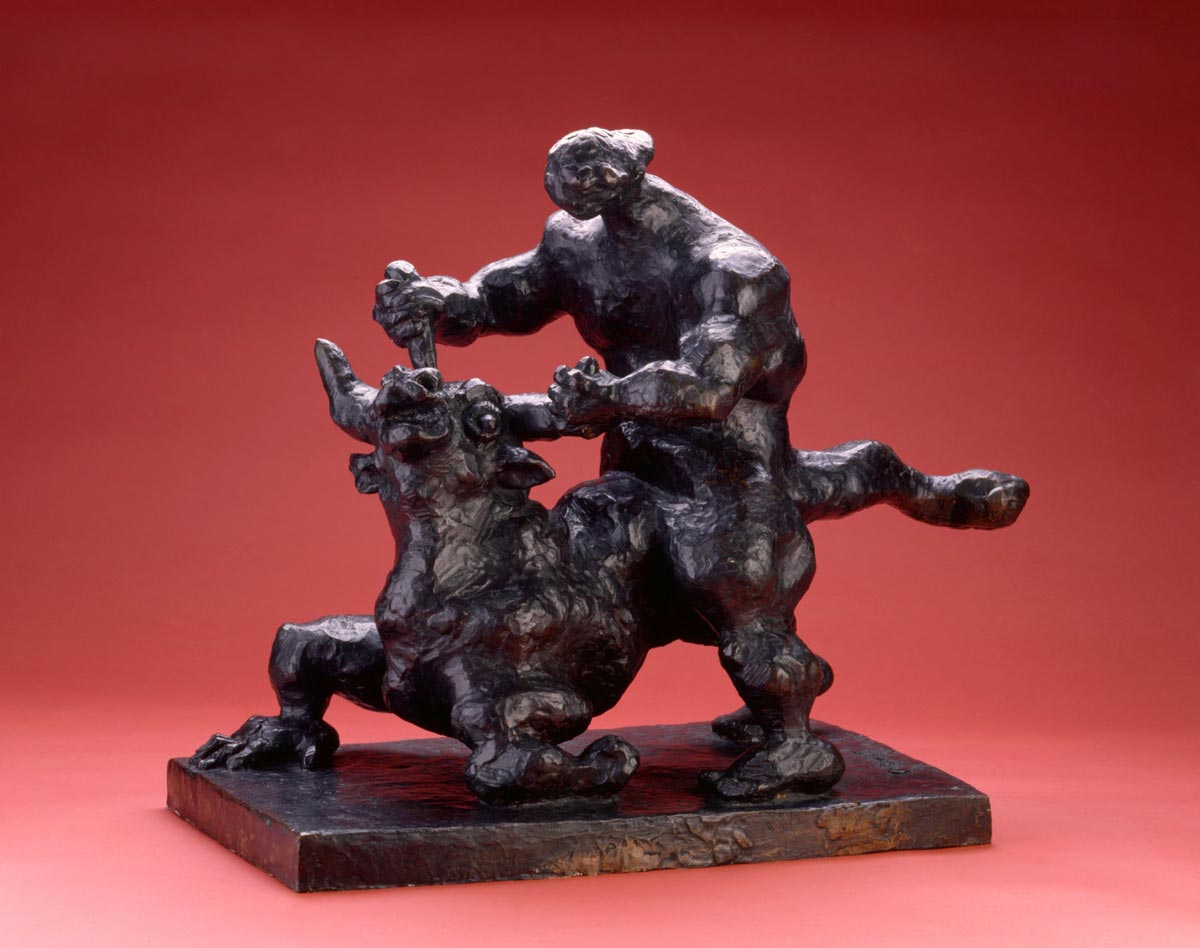
Modern art is no exception. We have to look no further than the sculptures of Jacques Lipchitz (1891–1973).
Jacques Lipchitz was a Jewish artist from France who was born in Lithuania. He was classically trained in Paris, although he soon worked in a cubist style, such as Sailor with Guitar in the collection of the Albright-Knox Art Gallery.
Claude Monet (French, 1840–1926). Waterloo Bridge, Sunlight Effect, ca. 1900 (dated 1903). Oil on canvas. Milwaukee Art Museum, Bequest of Mrs. Albert T. Friedmann M1950.3. Photo credit: John R. Glembin.
One of the important areas of museum research is that of provenance, or the history of ownership.
Why is it important to know who owned an artwork? Well, for a number of reasons.