In honor of Women’s History Month, the Milwaukee Art Museum is joining the National Museum of Women in the Arts in their effort to address the persisting gender imbalance in the art world and highlight more women artists. Though kicking off in March, these efforts will extend far beyond a single month, with special programming focused on female artists all year.
Who run the [art] world? Historically, men. But, despite an enduring lack of public recognition and acclaim, our Collection shows that women artists have helped shape the art world throughout time, using their talents to not only reflect the world around them, but also challenge conventions, make bold statements, and speak to the female experience.
Below are just a few of the works by women artists currently on view. Stop by the Museum to see them in person, in celebration of Women’s History Month.
Unknown (American), Selections from the San Quentin Prison Archive, 1930s–1980s (detail). Courtesy Nigel Poor & San Quentin State Prison Museum with thanks to Warden Ron Davis & Lieutenant Sam Robinson.
Unknown (American), Selections from the San Quentin Prison Archive, 1930s–1980s. Courtesy Nigel Poor & San Quentin State Prison Museum with thanks to Warden Ron Davis & Lieutenant Sam Robinson.
Donate books.
In conjunction with the exhibition The San Quentin Project, The Milwaukee Art Museum is collecting books for the incarcerated people in our community. The book drive continues through March 10, 2019, through the run of the exhibition The San Quentin Project: Nigel Poor and the Men of San Quentin State Prison.
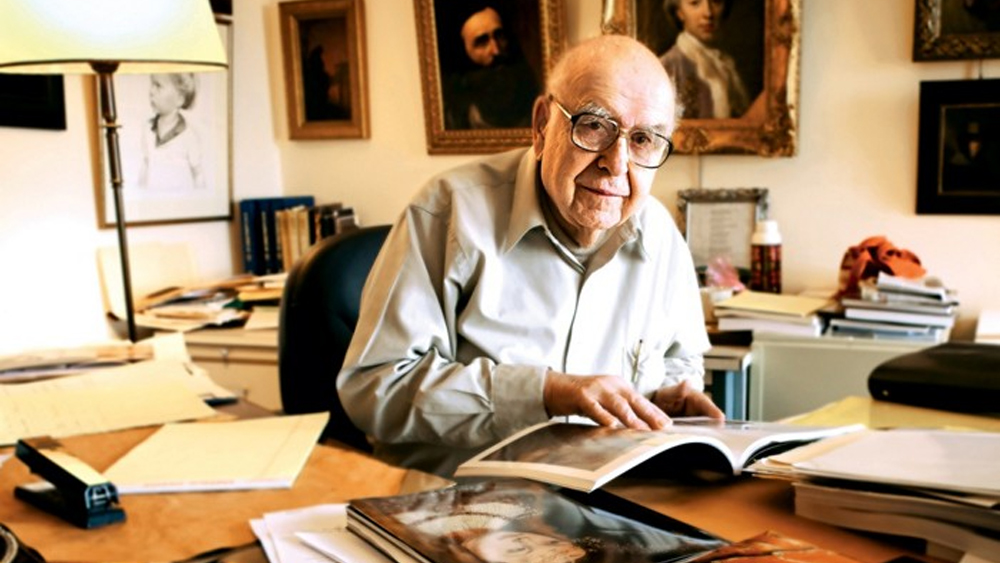
Photo of Dr. Alfred Bader by David Bader Photography
There is never a good time to write about the loss of a friend. And though I knew him for only a short time, Dr. Alfred Bader was a friend to us all in the Milwaukee Art Museum family. News of his passing, on December 23, brought a weighted pause to the celebrations this past holiday season. Articles in the Journal Sentinel and Business Journal cover the biography and accomplishments of Dr. Bader—chemist, businessman, and philanthropist—a man who helped build Milwaukee’s industry and enrich its culture. It is as an avid collector and supporter of art that Dr. Bader will forever be honored at the Museum.
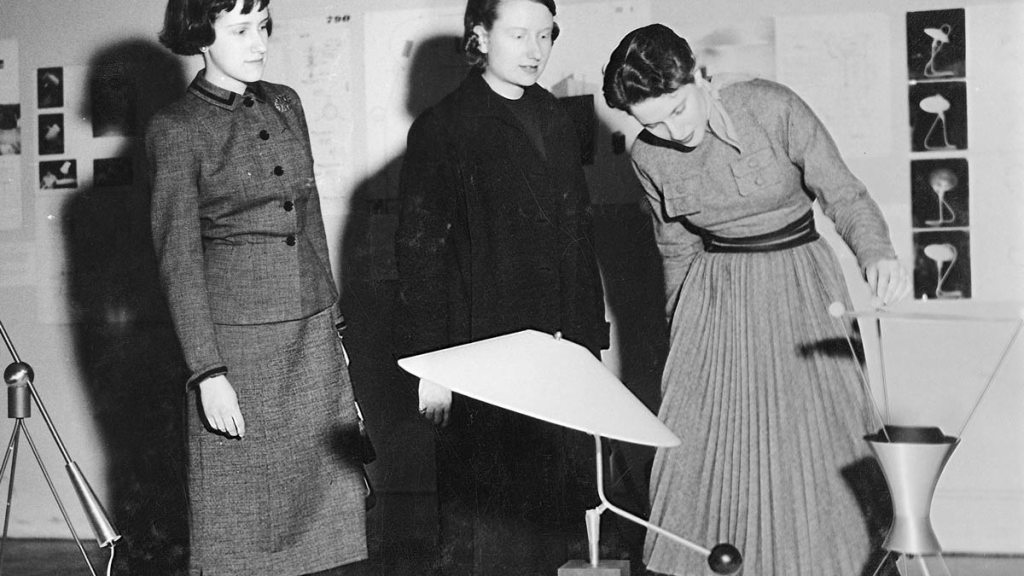
Installation view of the exhibition “The House in the Museum Garden,” April 12, 1949–October 30, 1949. Photographic Archive, Exhibition Albums, 405.9. The Museum of Modern Art Archives, New York. IN405.15. Photo by Ezra Stoller
In 1950, the Museum of Modern Art and New York-based Heifetz Manufacturing Company announced a design competition for floor and table lamps, offering cash prizes and the tantalizing promise that Heifetz would put at least three-quarters of the winning designs into production. [1] Ultimately, eight table lamps and two floor lamps were chosen for manufacture from over 600 entries. [2] These lamps were exhibited at MoMA from March 27–June 3, 1951 (alongside drawings, diagrams, photographs of the designs), published in Arts & Architecture magazine, and offered for sale across the United States at numerous stores, including Carson, Pirie, Scott & Co. in Chicago and Macy’s in New York and San Francisco. [3] Now, two of these lamps are on view at the Milwaukee Art Museum as part of Serious Play: Design in Midcentury America (Sept 28, 2018-Jan 6, 2019).
UWM-Milwaukee Peck School of the Arts students (left to right) Anna Emerson, Paul Manley, and Jessica Schubkegel installing the House of Cards spiral. Photo by Ray Chi.
In the early 1950s, designers Charles and Ray Eames painstakingly arranged penny cars, pencils, pills, and papers to photograph for their House of Cards construction set. They probably never imagined that decades later, thousands of children and adults in the Milwaukee region would meticulously decorate their own House of Cards, let alone that these cards would be installed together in a towering spiral at the Milwaukee Art Museum in conjunction with the exhibition Serious Play: Design in Midcentury America.
Joseph D. Ketner II, who was chief curator at the Museum from 2005 to 2008 (when David Gordon was the director), died earlier this month after a battle with cancer. Many of you may have seen the article in the Milwaukee Journal Sentinel by Mary Louise Schumacher.
Arthur Carrara in his studio, Kettle Moraine, Wisconsin, ca. 1964. Published in Recent Works: 1960-1965 (1965). Photo by John Cornwall/Arthur Carrara.
Architect and designer Arthur A. Carrara (American, 1914–1995) was born in Chicago and worked in locations across the world, from Buffalo, New York to the Philippines. But for Carrara, Wisconsin felt like home; in his 1964 retrospective catalog he fondly described Wisconsin as “my adopted state.”[1] Over the course of his multifaceted career, Carrara worked repeatedly in Wisconsin—creating homes for private clients, designing exhibitions at the Milwaukee Art Center, and eventually building a studio for himself in the state’s Kettle Moraine region.
Ho-Chunk presence and their arts contributed to the development of Wisconsin Dells tourism—and to the material and aesthetic culture of the state. While Ho-Chunk representation is not always considered by tourists beyond stereotypical art for the trade, there is still a long and well-documented history of Ho-Chunk material life in the Wisconsin Dells area. The Ho-Chunk objects currently on exhibition in Mrs. M—’s Cabinet, are not the expected souvenirs of the Wisconsin Dells trade, but give a glimpse into the unfamiliar Ho-Chunk objects made and used in the Dells in the late 19th century.
Kent Dickinson (American, active 1970s) Manufactured by Odlot Game Company (United States, active 1970s), Metradoms: a game of metric dominos, 1976. Plastic and paper. Milwaukee Art Museum, Gift of Daniel Ostroff M2017.28. Photo by John R. Glembin.
A selection of educational products from the 1970s, recently installed in MAM’s 20th- and 21st- Century Design Galleries, tells the story of two pressing issues in the United States during the period through the lens of design for children.