
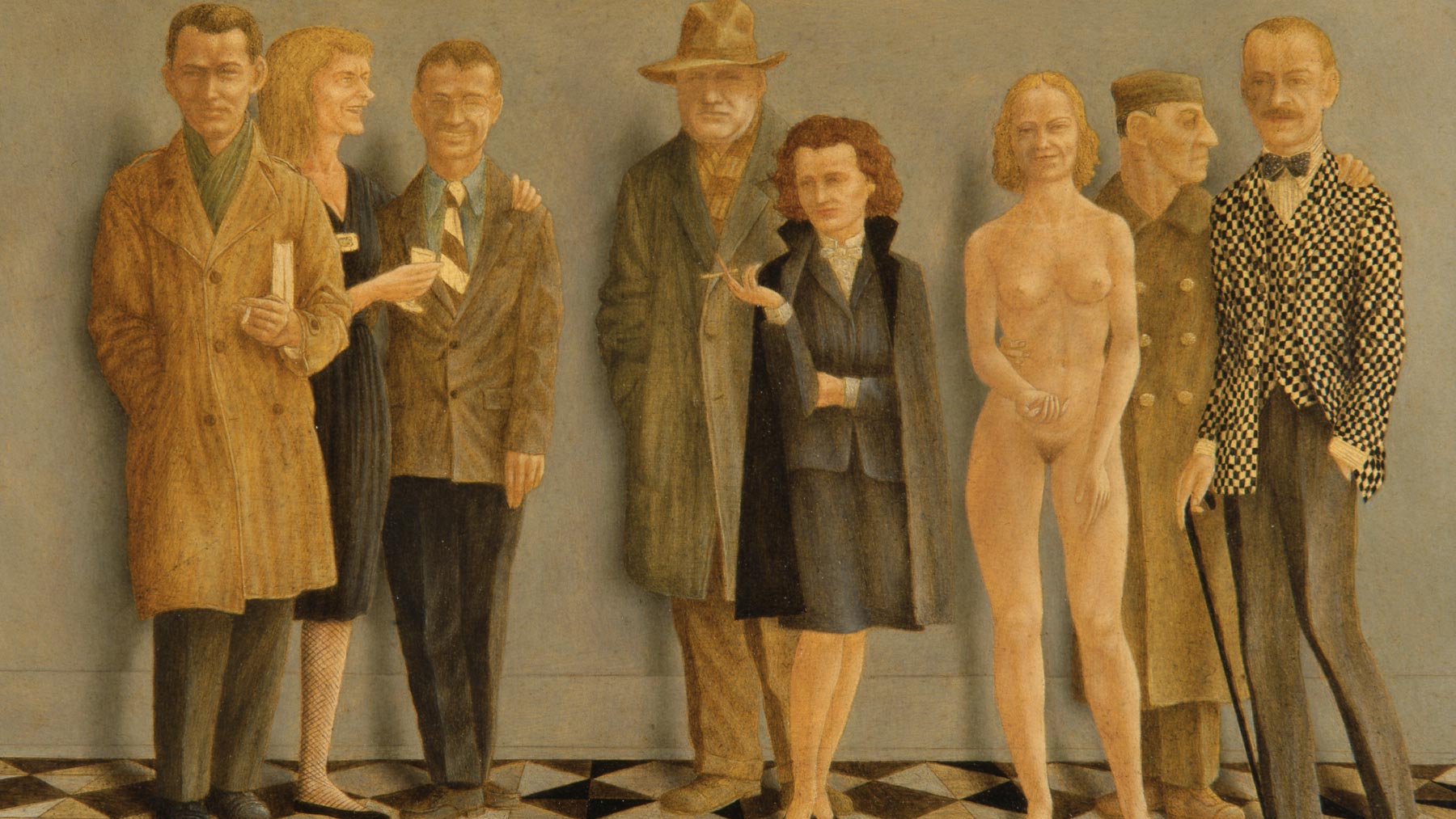
Thomas Busciglio-Ritter, the exhibition curator, introduces us to the Wisconsin artists in this special rotation.
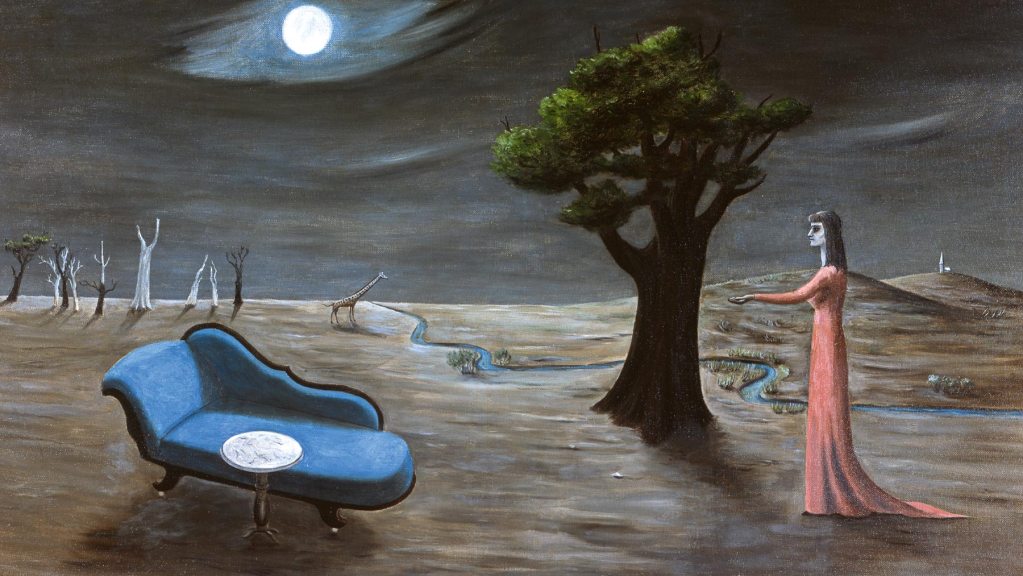
Associated with broader currents of Magic Realism across the United States, the Wisconsin group blended fantastical elements into otherwise realistic settings to challenge viewers’ perceptions of the world.
Complementing Gertrude Abercrombie: The Whole World Is a Mystery and showcasing the Milwaukee Art Museum’s collection of Wisconsin art, Gertrude & Friends: The Wisconsin Magic Realists highlights a singular group of mid-20th century artists from the state.
Complementing Gertrude Abercrombie: The Whole World Is a Mystery and highlighting the Milwaukee Art Museum’s collection of Wisconsin art, Gertrude & Friends: The Wisconsin Magic Realists examines the work of the Wisconsin Magic Realists in the mid-20th century.
Milwaukee painters John Wilde and Karl J. Priebe developed a surreal approach to painting in the 1940s. Unconvinced by the idealized rural paintings of Regionalist artists, notably John Steuart Curry, they associated with broader currents of Magic Realism and Surrealism across the United States. The Wisconsin group blended fantastical elements into otherwise realistic settings to challenge viewers’ perceptions of the world.
Several artists soon joined Wilde and Priebe in this approach, including Marshall Glasier and Gertrude Abercrombie. Moving among the art circles of Madison, Milwaukee, and Chicago, they formed friendships and creative partnerships.
The Magic Realists often portrayed themselves and one another in a playful, unassuming manner. Wilde’s 1966 group portrait of core members embodies their signature eccentricity, with elaborate outfits, a checked floor motif, and the enigmatic presence of an unnamed nude figure. Abercrombie purchased the painting from Wilde in 1967 and remarked, “I am not going to hang it; I am going to hold it on my lap all the time.”
Although seemingly lighthearted on the surface, members of the group also addressed the impact of American consumer culture and the artificiality of the built environment. Discarded objects appear throughout Priebe’s landscapes like relics of a careless society. Commentary on commodification also appears in the work of painters loosely associated with the group, including Santos Zingale and Aaron Bohrod. Zingale, for instance, depicted modern city life with humor, questioning contemporary desires for inexpensive, mass-produced goods.
The paintings in Gertrude & Friends: The Wisconsin Magic Realists reveal the spirited blend of intellect, humor, and imagination that defined this circle of Wisconsin artists—proof that even the everyday can feel a little extraordinary.
This exhibition is drawn from the Layton Art Collection at the Milwaukee Art Museum and the Museum’s collection.
Gertrude & Friends: The Wisconsin Magic Realists is a Layton Art Collection Focus Exhibition. The steward of the collection that Frederick Layton started, one of Milwaukee’s founding public art collections, the Layton Art Collection, Inc., is proud to partner with the Milwaukee Art Museum.
Learn more about the exhibition and related programs at mam.org/gertrude-and-friends.
Gertrude & Friends: The Wisconsin Magic Realists
December 12, 2025–July, 2026
Continue reading



Header image: John Wilde, Karl Priebe, Gertrude Abercrombie, Dudley Huppler, Marshall Glasier, Sylvia Fein, a Friend, Arnold Dadian and Myself (detail), 1966. Milwaukee Art Museum, Gift of the Gertrude Abercrombie Trust. Photo by P. Richard Eells © John Wilde