
Chyna Bounds, co-curator of Homelands with guest curator Kendra Greendeer, celebrates the three-year-long project and the partnership with the Museum’s Native Initiatives Advisory Group.
To move through the newly reinstalled gallery Homelands: Mnë’nának, Māēnāēwah, Tešišik (K223) is to move through a shifting map—one that begins in what is now called Wisconsin, travels along the Great Lakes waterways, and enters into landscapes both physical and imagined. In this space, the historically one-sided narrative of the “American West” is entirely reframed to amplify, expand, and honor Native voices.
Here, Native histories are foundational to the story of American art. Land and water shown as picturesque and uninhabited in Anglo-American paintings, suggesting Native communities no longer resided there, are reconsidered as sites of Indigenous memory, presence, and vitality.
All three Indigenous names for Milwaukee—mnë’nának (Potawatomi, “the good land”), Māēnāēwah (Menominee, “some misfortune happens”), and Tešišik (Ho-Chunk, “bad lake”)—reflect the city’s history as a gathering place where land meets water.
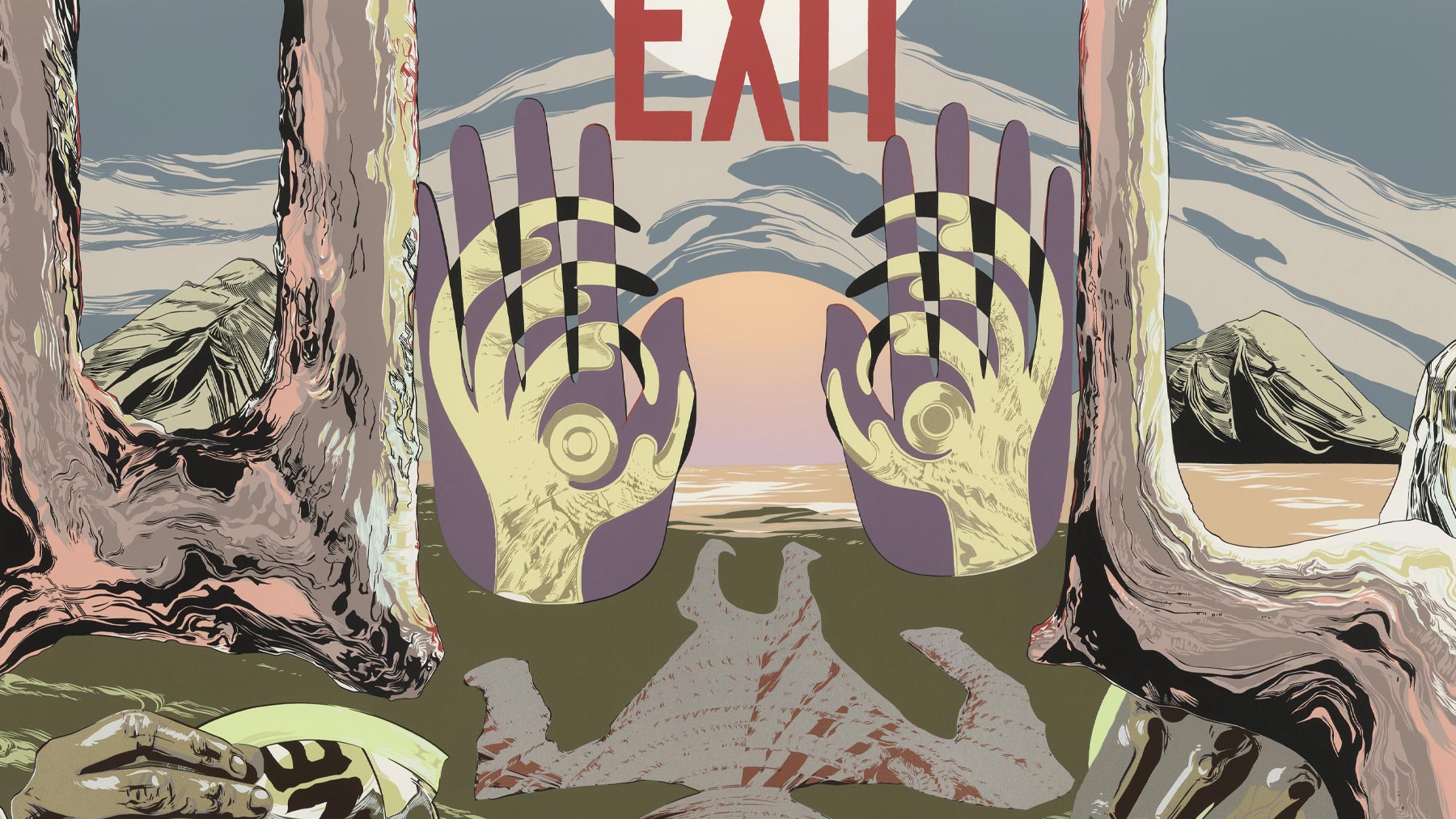
Andrea Carlson’s vivid screenprint Exit explores these layered geographies. Rooted in Wisconsin, the work centers on a figure from one of the few remaining effigy mounds near Baraboo—an ancestral HoChunk site partially destroyed by road construction in 1905. Carlson draws a line from that erasure to the I-94 highway, which cuts across Ho-Chunk, Dakota, and Anishinaabe lands between Minneapolis and Chicago.
With bold colors and unflinching imagery, Fritz Scholder’s Falling Buffalo symbolizes loss and restoration. His painting speaks to the Menominee Nation’s efforts to restore a buffalo population nearly wiped out in Wisconsin and across the United States due to colonization and expansion. More than functional objects, fish decoys made by Ojibwe artists from Northern Wisconsin are vessels of memory. Passed from hand to hand and spanning generations, the carved decoys are lessons in craftsmanship and how to nourish oneself from waters that have long sustained Native communities. They represent the fish varieties (bass, pike, walleye) found throughout Wisconsin’s rivers.
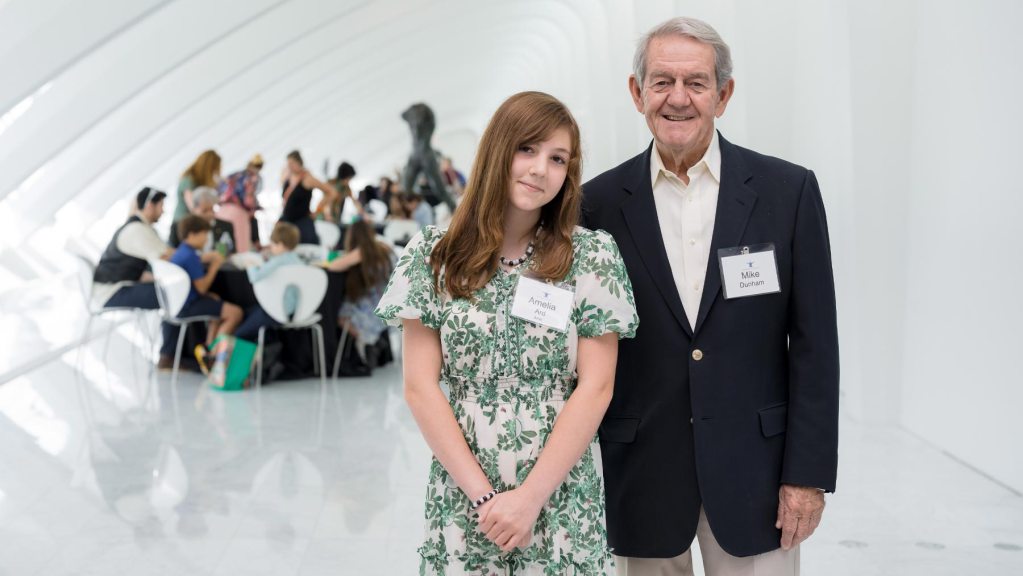
The three-year development of Homelands was deeply collaborative, involving Kendra Greendeer, PhD, and the Museum’s Native Initiatives Advisory Group (NIAG). A member of the Ho-Chunk Nation, Greendeer is the Ihlenfeld Curator of Collaborative and Community Exhibitions at the Weisman Art Museum in Minneapolis. NIAG, composed of Native scholars, artists, and community leaders across Wisconsin, was formed in 2021 with the guiding ethos, “nothing about us without us.” The group has played an important role in planning and interpreting exhibitions, collaborating on public programs, and offering their insights on new acquisitions. Their work ensures that Indigenous presence in the galleries is not symbolic, but structural.
Learn more about Homelands, the NIAG, and related projects at mam.org/homelands.
Homelands: Mnë’nának, Māēnāēwah, Tešišik
Gallery K223
Ongoing
Support
This project is made possible through support from the Terra Foundation for American Art.

Continue reading
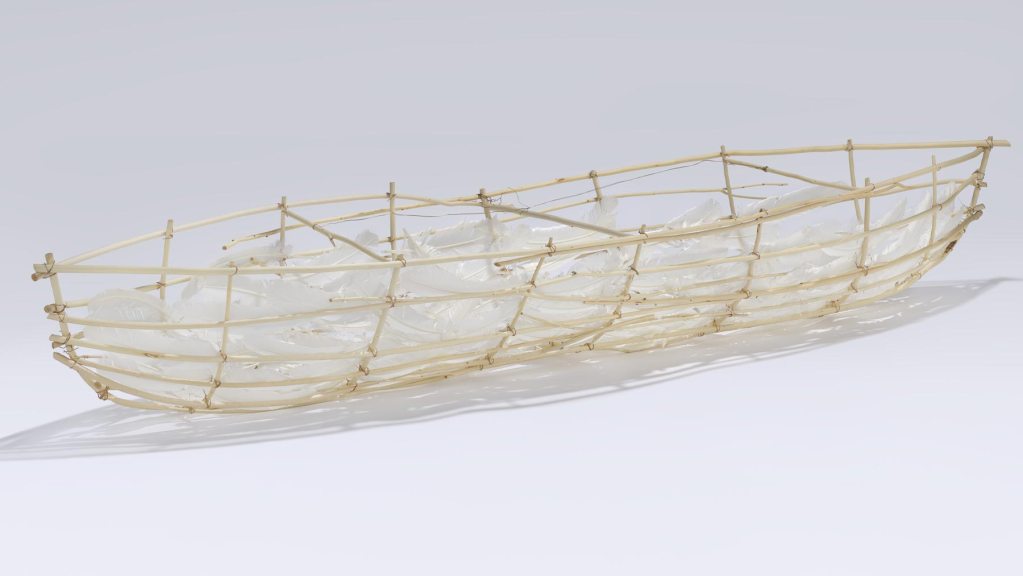
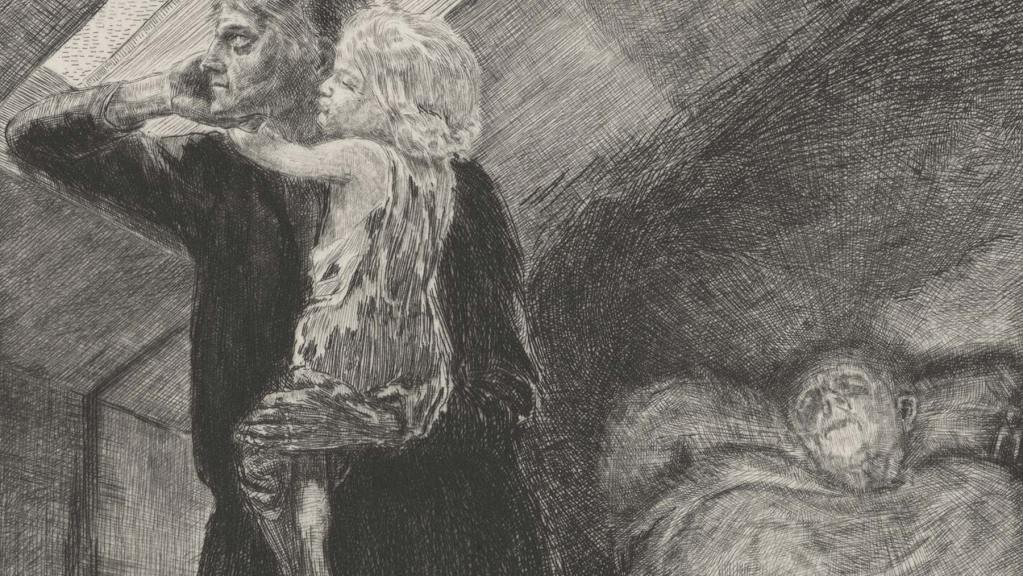
Header image: Andrea Carlson (Ojibwe, b. 1979), Exit (detail), 2018. Purchase, Lucia K. Stern Trust, M2023.162.