

Nikki Otten, associate curator of prints and drawings, explains how new fears altered a historically skeleton-led motif.
Ghosts and hauntings center many festivities this time of year. Reviving the Dance of Death lifts the veil to present two artists’ visions of death’s presence. Albert Besnard and Max Klinger were inspired by a motif called the dance of death. They reinterpreted it in print portfolios hundreds of years after it was most popular. Both artists witnessed discoveries in science and technology that changed the experience of death during the 19th century, and their images emphasize its unpredictability. Each depicted the subject differently, however, as the two prints pictured here demonstrate. Take a closer look, and consider perceptions of death today.

After Her Visit (Après sa visite), from the portfolio Elle, 1900. Purchase, Schuchardt Fund M2017.16.10
The active lines extending from the bereaved here suggest their pain is unable to be contained.
Skeletons personify death and appear in traditional dances of death. Besnard’s death figure occupies the same space as the mourners.
Death has come to this home, but Besnard emphasized those left behind. The skeleton turns its head to witness the resulting grief.
Amid this sparse setting, the interactions among the figures become the focus.
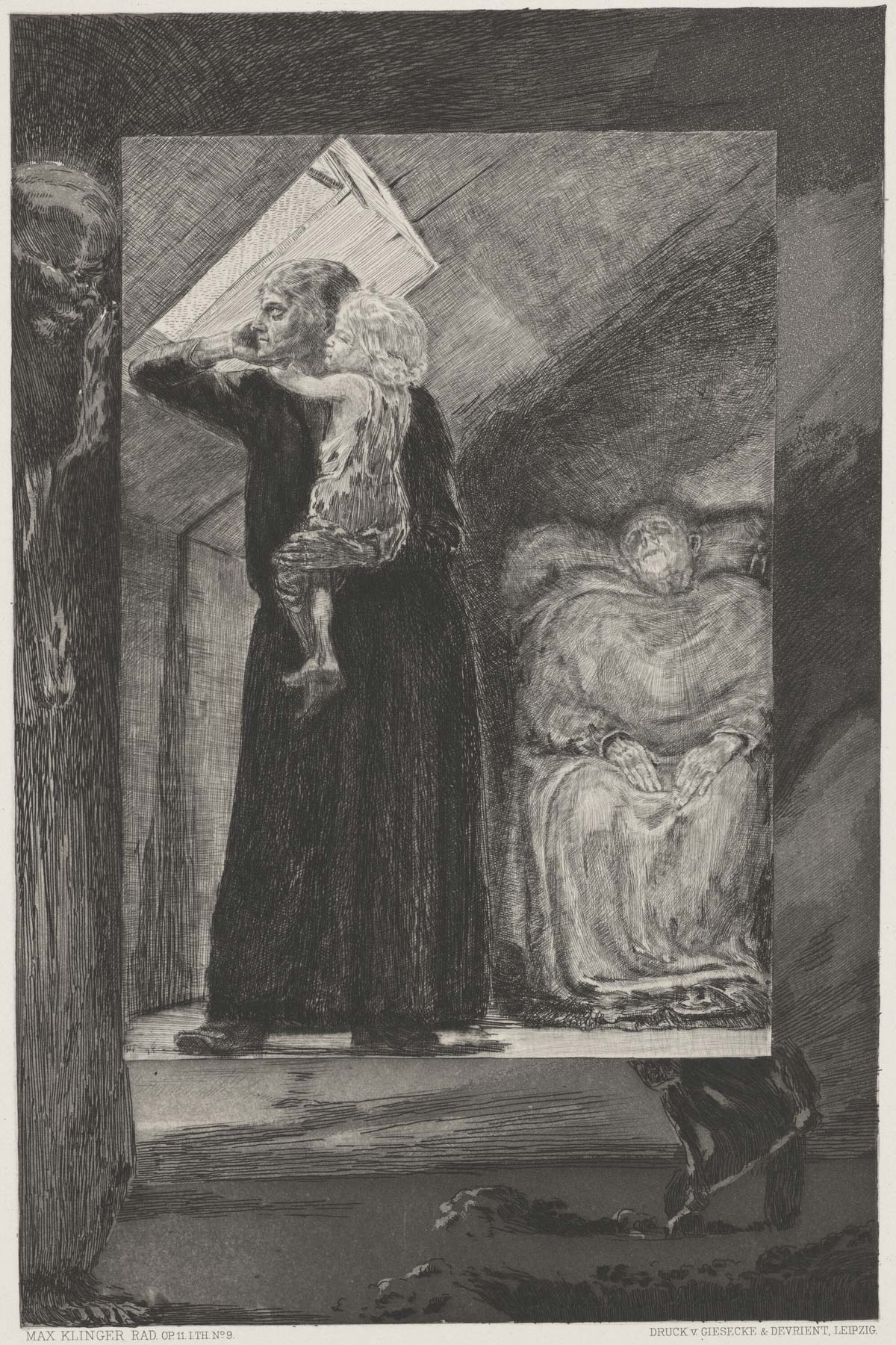
Klinger’s scene reveals the family’s poverty. The slanted roofline indicates they live in an attic-level room, where the rent was lower. The dirt from a leaking window stains the wall. The mother, perhaps, is worrying about supporting herself and her child without her husband.
This father has or will soon die. The lines radiating from his head may symbolize life leaving his body.
A skeleton is not present in Klinger’s room. Rather, we see a death figure observing the family from the margins while a worker digs a grave below.
Visit the exhibition to explore (and compare) the artists’ other prints. Learn more, and listen to French composer Camille Saint-Saëns’s
Danse Macabre, written around the same time as the portfolios, at mam.org/dance-of-death.
Continue reading

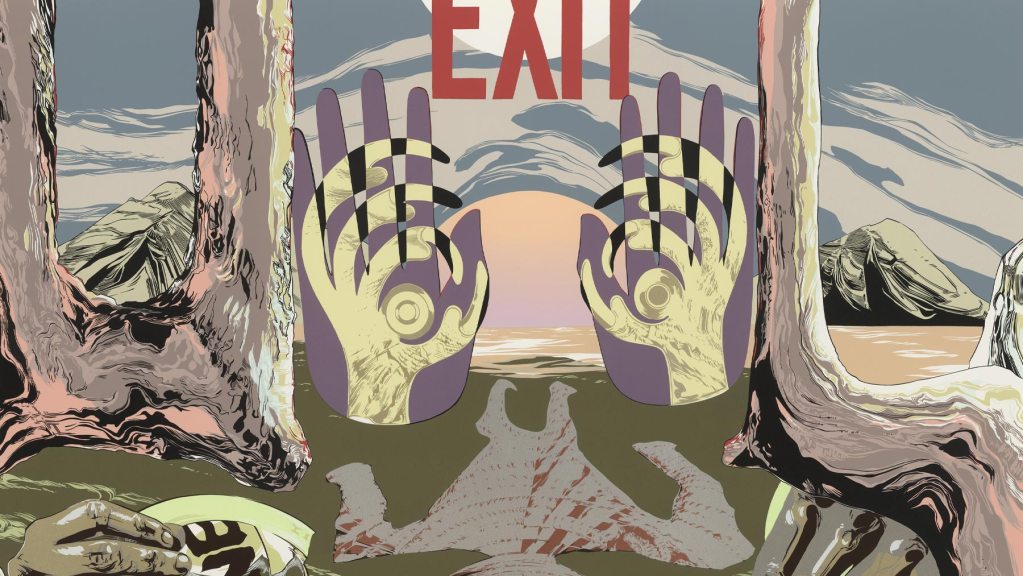
Header image: Max Klinger, Poor Family (Arme Familie) (detail), from the portfolio On Death I, Part I, Opus XI (Vom Tode, Erster Teil, Opus XI), 1885–89, published 1897. Purchase, René von Schleinitz Memorial Fund M1994.367.1–.10