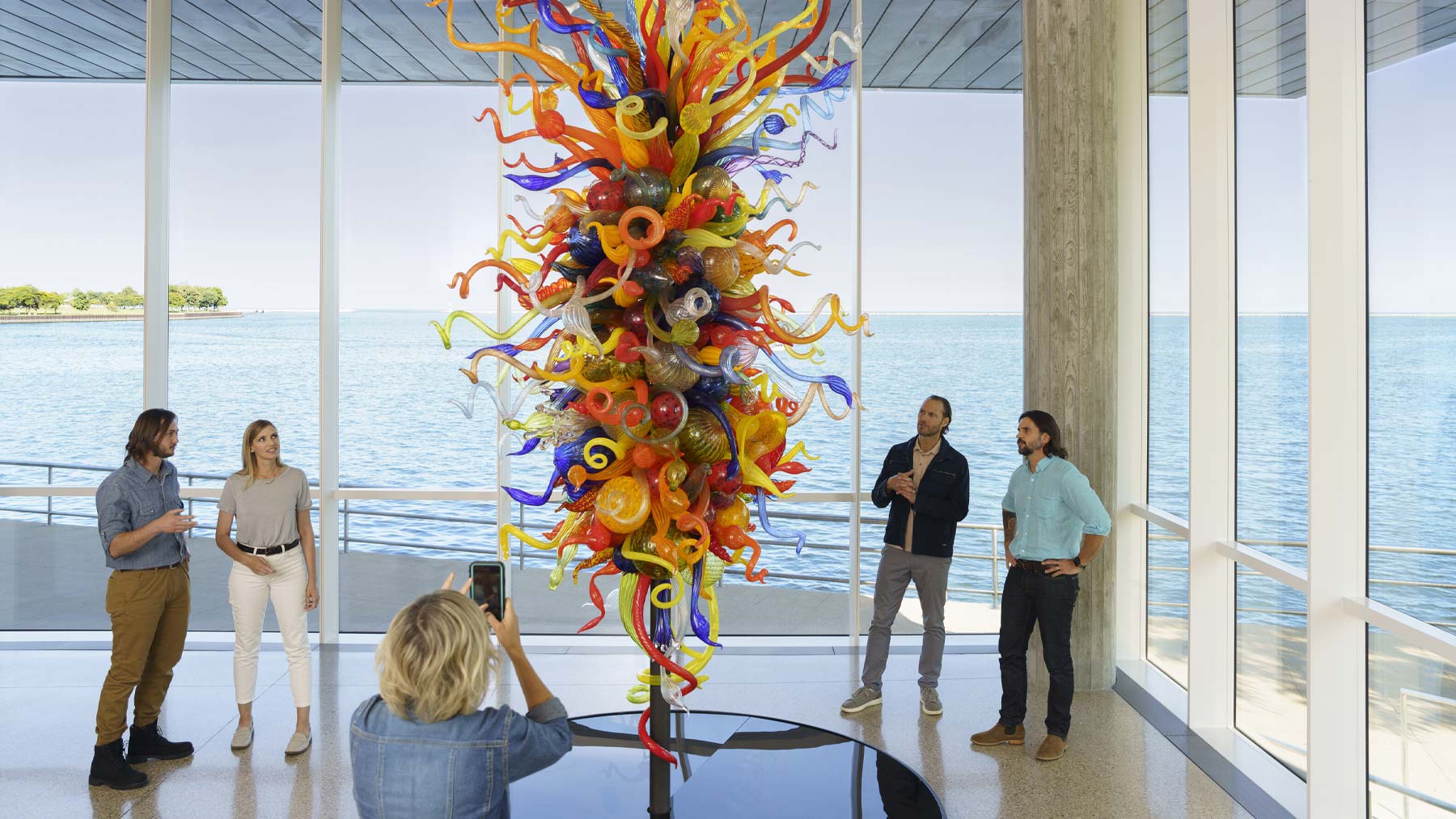
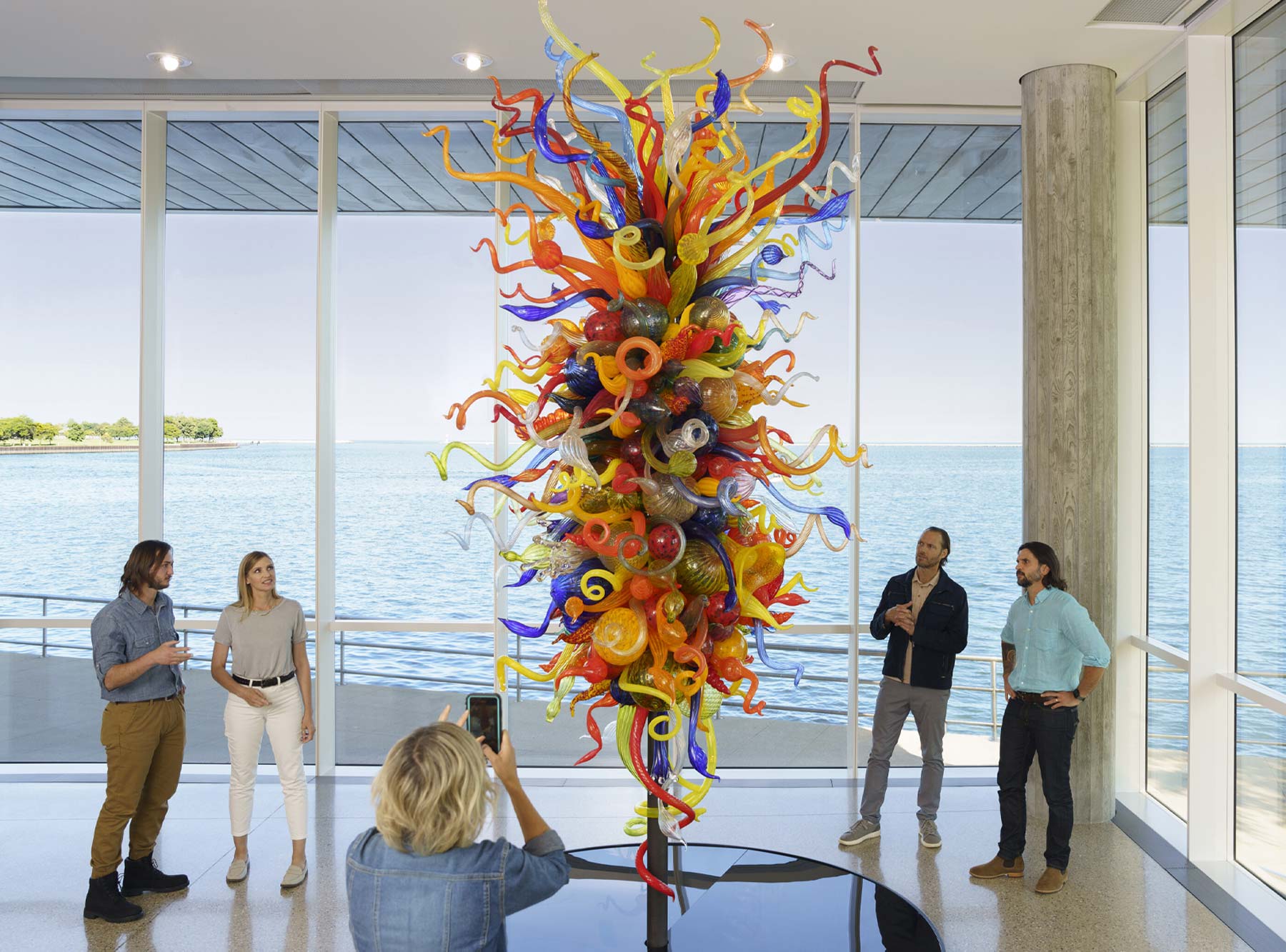
We all have our favorite artworks in the collection. That painting we share first with an out-of-town friend. The sculpture we absolutely must walk past. Some favorites, like Dale Chihuly’s sculpture pictured here, are widely beloved—across generations. Others may have only recently found a place in our hearts.
What stories do you share when introducing someone to that work? Continue reading to discover details on a few faves to up your art chops and impress your friends.
Did you know these details about your favorite works of art in the collection?
East End
Dale Chihuly studied at Madison, in its innovative program in glass.
With sculptures like this one, Dale Chihuly brought popular attention to the American studio glass movement, which has a long history in Wisconsin. A native of Washington state, Dale Chihuly came to the University of Wisconsin–Madison in 1965 to study in the nation’s first collegiate program in glass. Artist Harvey Littleton started the program in 1963. You can see his work Lemon/Red Crown in gallery K116.
Gallery K119
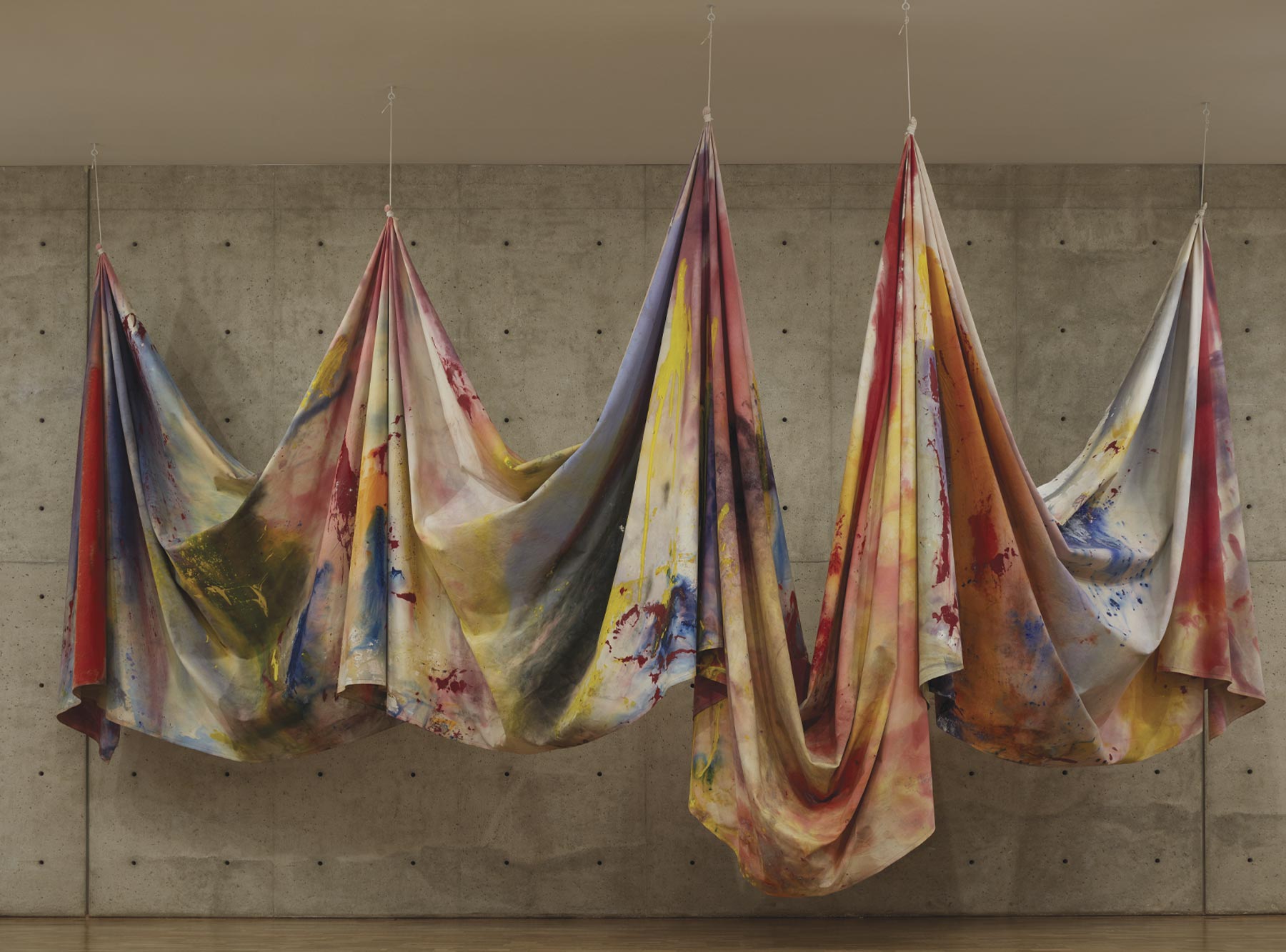
Sam Gilliam was the first Black artist to represent the United States at the Venice Biennale, in 1972.
Sam Gilliam was one of the most influential and innovative artists of his generation. This early draped canvas painting is from a series the artist began in 1968 that came to define his career. Gilliam’s large unstretched canvases suspended from the ceiling pushed the limits of painting beyond the frame. Reflecting on the series, he said, “Paint and surface took on an added, third-dimensional reality. Now the canvas was not only the means to, but a primary part of, the object.” Watch a video of the work being installed here.
Gallery K113
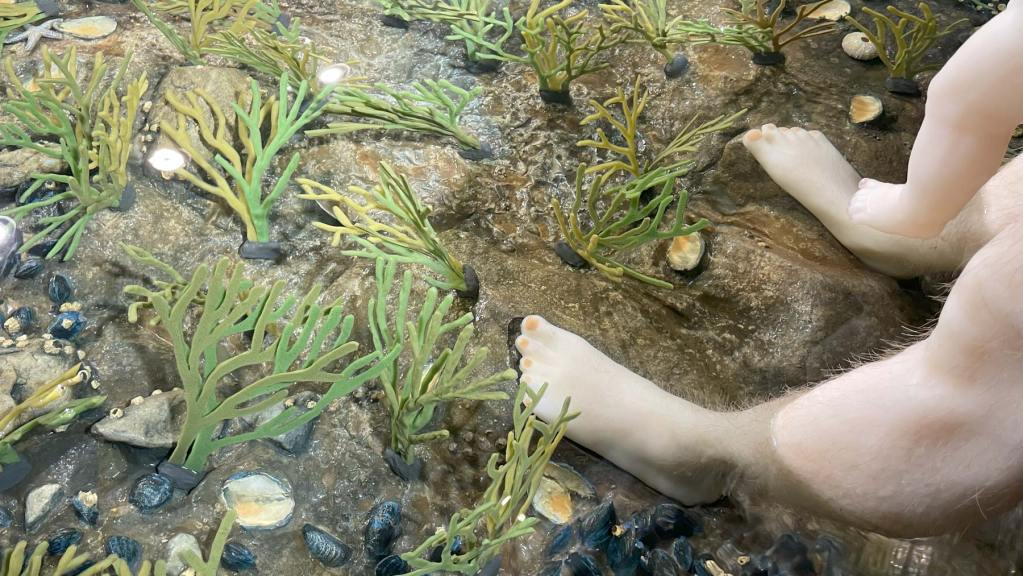
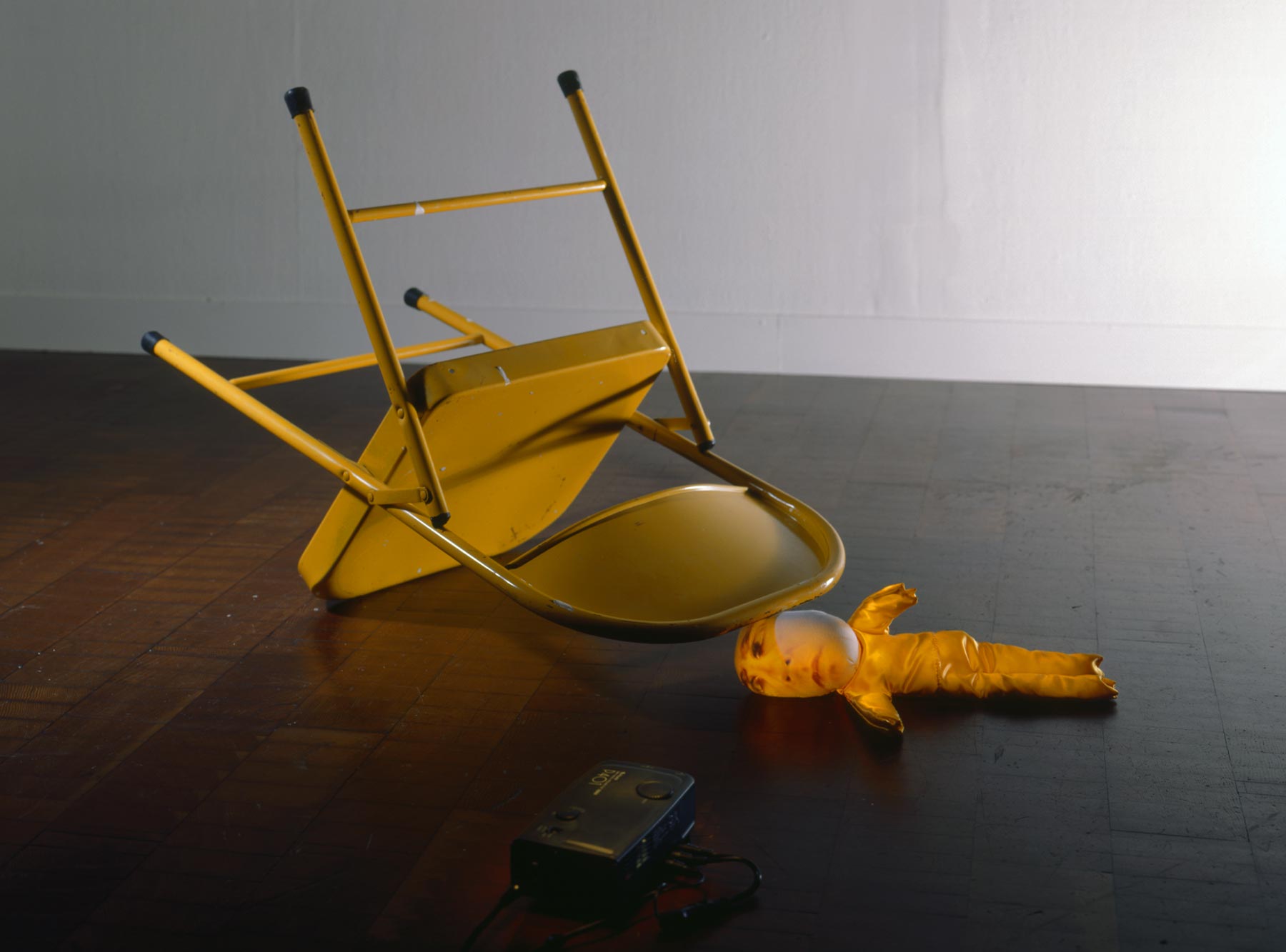
That’s the artist’s face projected onto the head of a doll.
Tony Oursler says things like, “Sometimes I can’t feel the top of my head,” “I’m a difficult person to get close to,” and “Sometimes I just don’t get the jokes.” These are his responses to the Minnesota Multiphasic Personality Inventory, or MMPI, a psychological test developed in the 1930s to determine a person’s mental health. Through this work, Oursler questions how we define “normal.” He shares his answers to the test to suggest we all have quirks and struggles.
Gallery K103
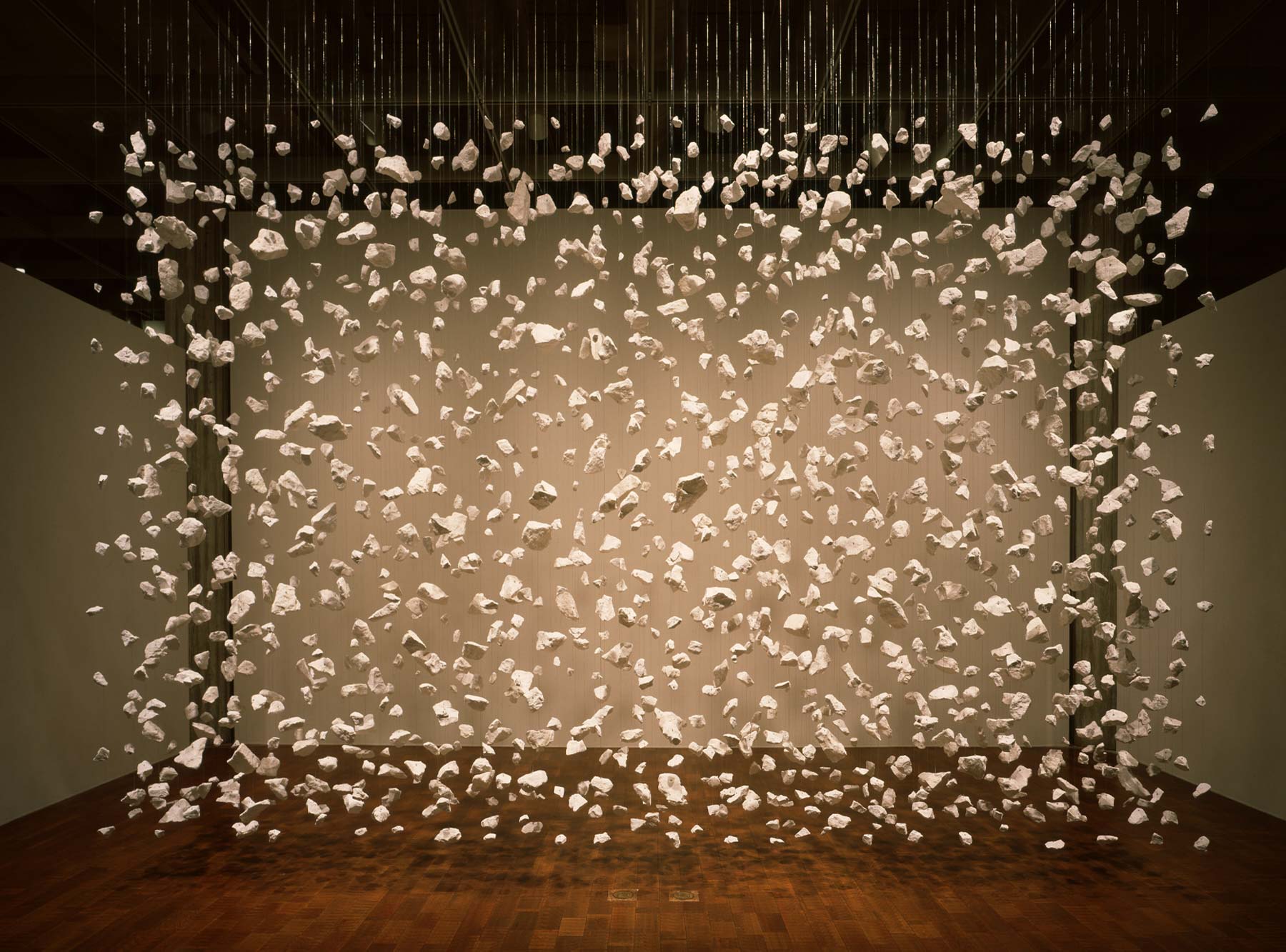
These chalk pieces are from a cliff that collapsed.
This installation takes re-creating an avalanche to a new level. On the southeastern edge of England are the White Cliffs of Dover, which continue to erode. The cliffs are an important symbol of Cornelia Parker’s homeland and a persistent image for the English, from Shakespearean references to World War Il songs. In fact, visit the top floor, gallery K222, to see Benjamin West’s painting General Monck Receiving Charles II on the Beaches of Dover from 1782.
Our conservation team recently deinstalled and restrung all 200+ strings to keep the work looking its best. Watch how it was done here.
Gallery S113
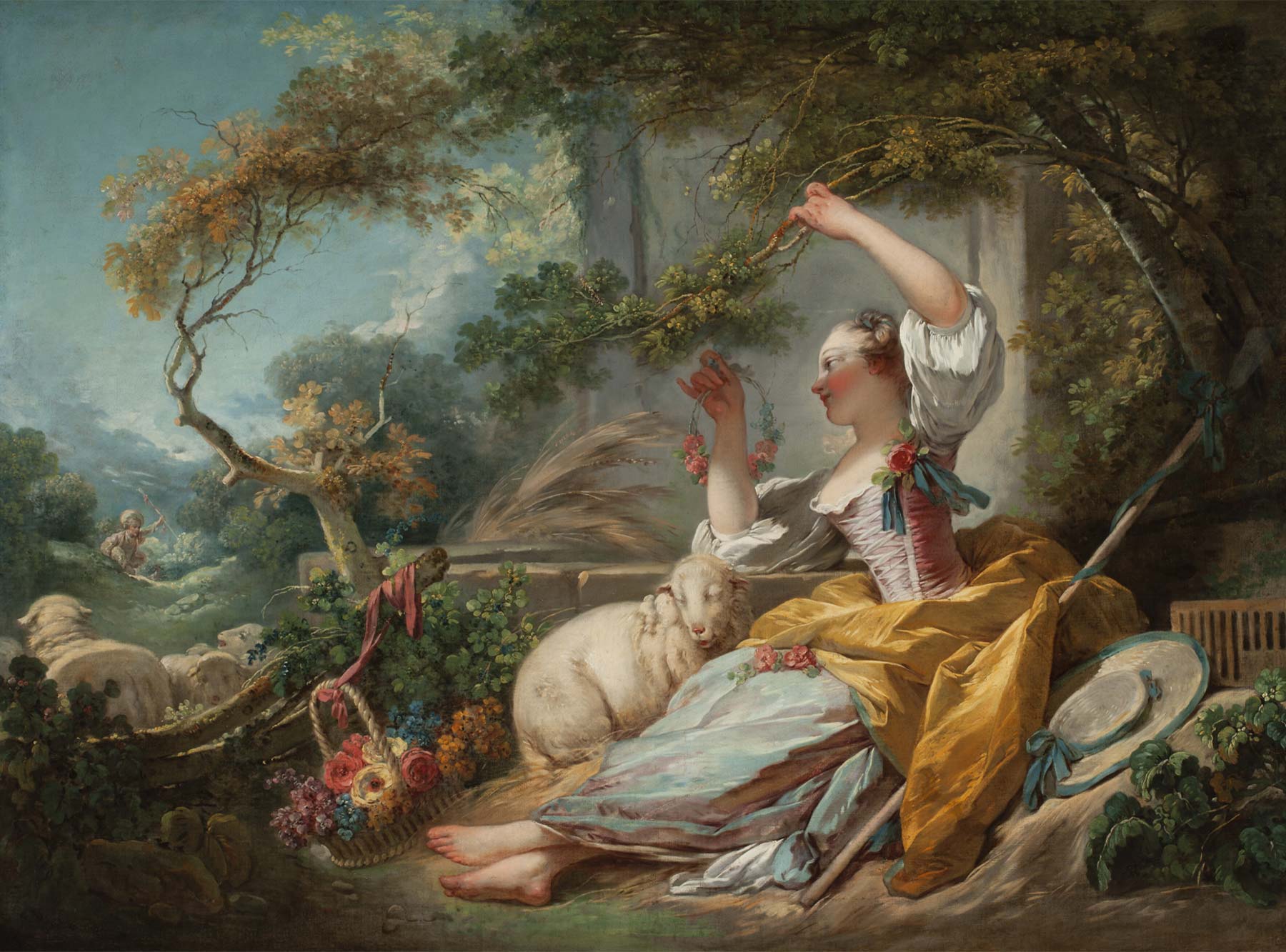
Birdcages were symbols of desire in 18th-century France.
In this painting, a rectangular birdcage sits to the right of the shepherdess. The lush pastoral setting, the woman’s revealing dress—her bare feet!—and the man approaching in the distance all reflect the day’s popular themes of love and, often, illicit amorous encounters. Fragonard was an influential painter of French Rococo art, and this lighthearted painting is typical of the style. A market for such works emerged with the wealthy, idle culture of King Louis XV’s court (1715–1774), whose abuses set the stage for the French Revolution.