

The artwork evokes an organic form—a flowering field—and reflects the deceptively simple yet complicated workings of the natural world.
The Winter Series is an annual gift to Milwaukee. Shoshana Resnikoff, Demmer Curator of 20th- and 21st-Century Design, describes what makes this year’s kinetic installation special.
Many visitors describe the Milwaukee Art Museum’s Quadracci Pavilion, designed by Spanish architect Santiago Calatrava and completed in 2001, as a “bird on the lake.” Yet, during a deep dive into the Museum’s archives one recent afternoon, I stumbled upon some photographs of the building’s construction that reminded me of a fact I often overlook: this iconic winged sculpture is a technologically complex feat of engineering. Steel, glass, concrete, and cabling make up this singular building that responds to the elements and interacts with the surrounding landscape.
When I was charged with proposing a work for the Winter Series this January, I knew the Netherlands-based studio DRIFT was the perfect team to take on the challenge of exhibiting in Windhover Hall. Together, we identified their groundbreaking work Meadow as the ideal artwork for the space. Meadow hangs from the ceiling and comprises electronically choreographed pendant lights made of aluminum, stainless steel, and robotic components. The lights’ fabric shades “bloom,” opening and closing to an unheard rhythm. Like our “bird on the lake,” the artwork evokes an organic form—a flowering field—and reflects the deceptively simple yet complicated workings of the natural world.
DRIFT founders Lonneke Gordijn and Ralph Nauta have long investigated the relationship between nature, technology, and humanity. At a time of increasing social and climate disruption, DRIFT asserts a vision of technology as a transformative and positive force in the relationship between people and the natural world. They describe the inspiration for Meadow as “the impermanence of the ever-changing seasons” and the cycle of life. Plant life is inherently networked, and Meadow follows that model: data cables connect each flower to a control box that operates the petals’ movements. In turn, the work connects visitors through a shared contemplative moment with the robotic flora above.
First designed in 2017, Meadow is site specific. The installation-site architecture determines the flower layout, while the local wildflowers inform the colors selected for the petal “skirts.” At the Museum, 18 flowers will be suspended in Windhover Hall. They will look as if they have “bloomed” there by chance. But installing the work in a space with no ceiling, where the roof is entirely glass and steel, required months of painstaking planning, troubleshooting, and creative engineering. DRIFT and Museum staff worked together across time zones and oceans to perfect the presentation.
Meadow’s journey from the Netherlands to Milwaukee is yet another reflection of the interconnectedness of our world. A persuasive example of the power of collaboration, Meadow is also a reminder that, even in the dark of winter, spring is just around the corner. In January, a meadow will bloom at the Milwaukee Art Museum, and I hope you’ll come to see it.
Learn more about the exhibition and related programs at mam.org/meadow.
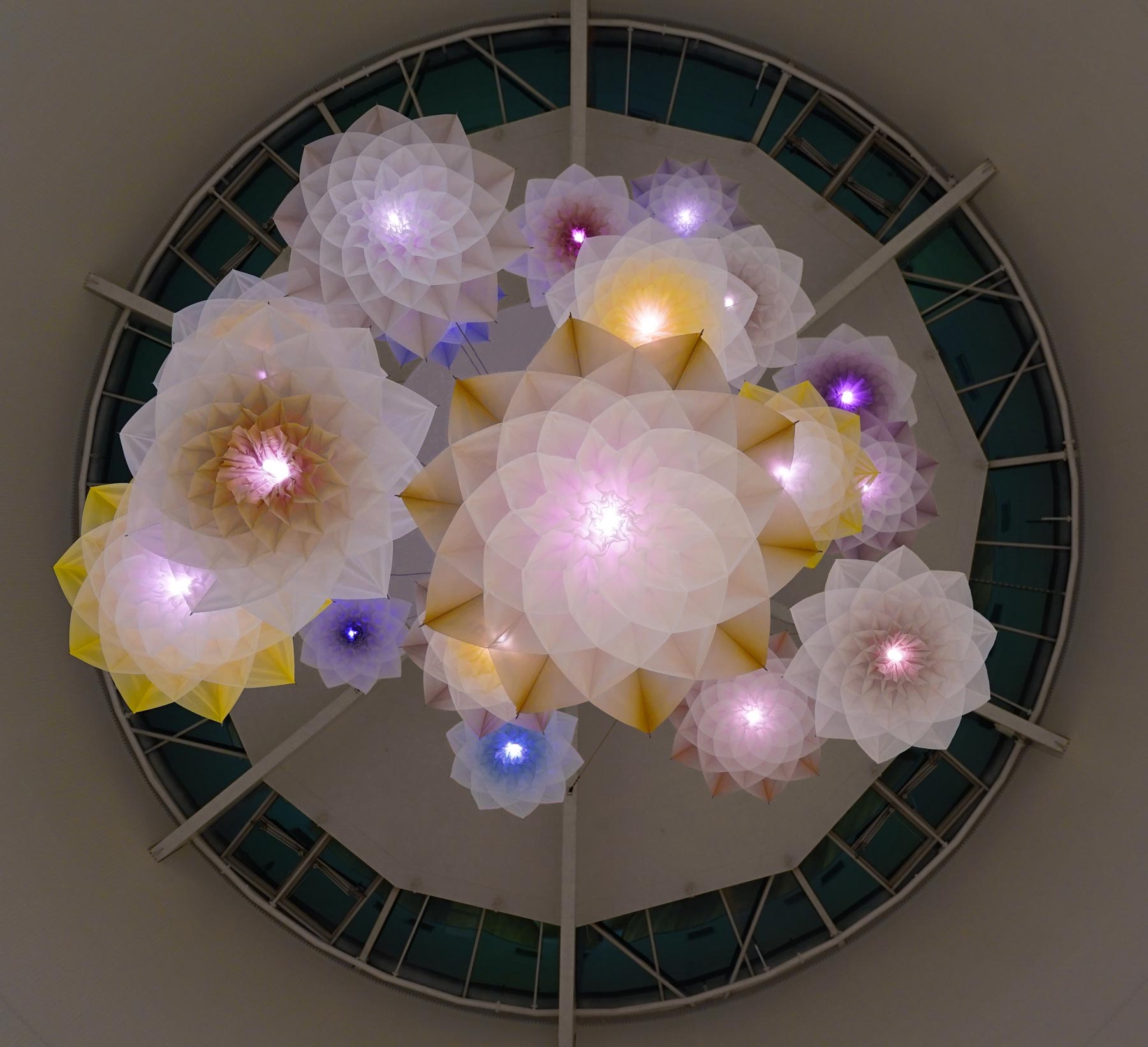
Winter Series: Meadow
Windhover Hall
Jan 18–April 13, 2025
Support
Presenting sponsor

Leadership sponsor
Milwaukee Art Museum’s Contemporary Art Society
Continue browsing



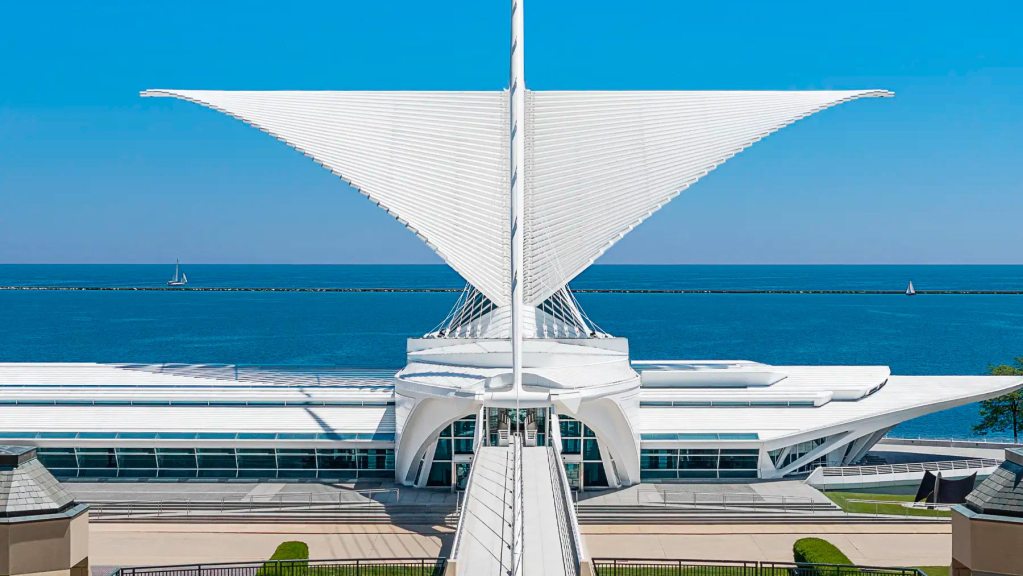

Image:
1. DRIFT, Meadow (detail), 2017. Inset photo by Oriol Tarridas.
2. Photo courtesy of the Centre Chodov Prague.